Will my child outgrow ADHD?
It's the question parents ask quietly, usually after a hard week. The honest answer is more hopeful than the internet, and less tidy.
Parents rarely ask this one in front of their child. It comes at the end of a difficult week, usually late at night, typed into a search bar: will they grow out of this?
Underneath it there are really two questions. Will the hardest parts of today still be here in ten years? And is the effort we're putting in now worth it?
The research has something useful to say about both.
What the long-term studies actually found
The Multimodal Treatment Study of ADHD followed a large group of children into adulthood, and in 2022 Sibley and colleagues published an analysis of how ADHD changed across those years in the American Journal of Psychiatry.
The headline was not "most people outgrow it" and not "nobody does." It was that symptoms fluctuate. Many participants had periods where they met criteria and periods where they didn't — stretches of remission that came and went rather than a single clean exit. A small group had symptoms that essentially resolved and stayed resolved. A larger group moved in and out depending, it appears, on what life was asking of them at the time.
That pattern will sound familiar to a lot of families. The good term, the terrible term. The summer when everything was fine, the September when nothing was.
Thapar and Cooper, in their 2016 review in The Lancet, describe something adults with ADHD recognise immediately: the visible hyperactivity of childhood often fades, while the difficulties with attention, organisation and getting started tend to persist. The running around stops. The forty-five minutes spent not starting a form does not.
So "outgrowing it" is the wrong frame. Changing shape is closer.
Why this happens: the brain is still being built
The 2021 World Federation of ADHD International Consensus Statement describes ADHD as a neurodevelopmental condition with substantial genetic contributions and differences in brain development, including a pattern where some regions involved in self-control mature later than in children without ADHD.
Later is the word that matters. It isn't absent. It isn't broken. On average, it arrives behind schedule.
Barkley's way of putting it is that ADHD creates a lag in self-regulation — a gap between how old a child is and how well they can hold a plan, wait, and stop themselves. That gap narrows with development. A twelve-year-old genuinely can do things a seven-year-old couldn't, even if they still find them harder than their classmates do.
This is why the evening you're having tonight is not a forecast of the next twenty years. It's a snapshot of a gap that is slowly closing.
What changes with age, and what tends to stay
Parents of teenagers and adults with ADHD describe a fairly consistent arc, and it lines up with what the research finds.
Usually easier with age: climbing on furniture, running in shops, constant physical restlessness, blurting out in class, the full-body meltdown over small things. The nervous system settles. The body learns to hold still, even when the inside is still busy.
Often still there: losing things, losing track of time, starting tasks, finishing tasks, keeping paperwork alive, remembering something at the moment it matters rather than four hours later.
Sometimes harder, not easier: anything that depends on self-organisation with no one checking. The teenage years and early adulthood remove the scaffolding — nobody checks the bag, nobody says bedtime — right when the demands increase. Families often describe a tough patch here that surprises them.
None of this is a prediction for your child. It's the range, so you're not blindsided by the shape of it.
What helps now, with the next ten years in mind
Teach the system, not just the behavior. A child who learns to write things down because they don't trust their memory has a tool for life. A child who gets reminded eighty times has a parent. Both get through tonight; only one ages well.
Protect what they're good at, deliberately. Parents consistently say the thing that mattered most in hindsight was the one activity their child was genuinely good at — the sport, the drawing, the instrument, the game. Ability in one visible area carries a child through years of being corrected in others.
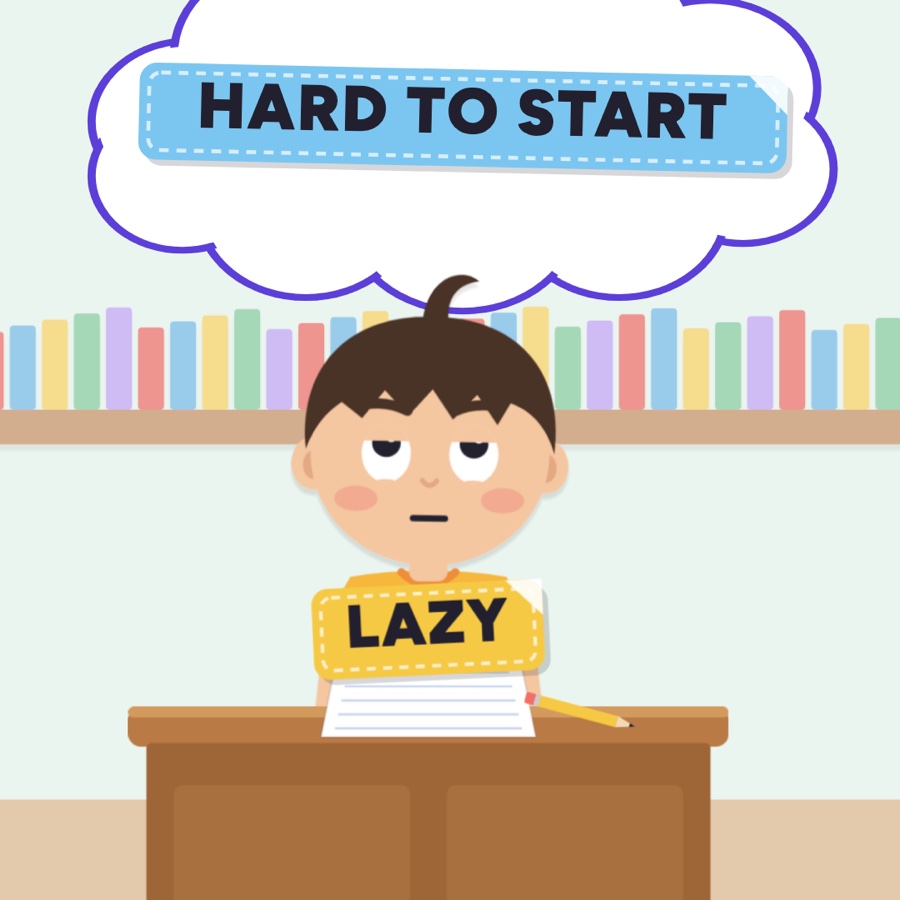
Keep the identity clean. Children with ADHD hear a lot of corrections. If "forgetful" and "lazy" become who they are rather than what happened, that outlasts the symptoms by decades. Name the difficulty, not the child.
Hand over one responsibility a year, on purpose. The alarm clock. The homework diary. The bag. Pick one thing a year and step back from it, with a plan for the mess that follows. Independence isn't a switch at eighteen; it's about ten small handovers.
What to say
When they ask if they'll always have it. "Some parts get easier as you get older. And you're learning tricks that work — those stay." True, concrete, and no promises you can't keep.
When they ask if something's wrong with them. "Nothing's wrong with you. Your brain is good at some things and slow at others, like everyone's — yours just has a bigger gap." Children accept this far more easily than adults expect.
When they compare themselves to a classmate. "He finds that bit easy. You find the thing he can't do easy. Both are real." Don't argue them out of the comparison; widen it.
When you're worried out loud in front of them. "I'm not worried about you. I'm figuring out how to make this bit easier." Children hear worry as a verdict on themselves. Worth separating.
What to try this week
- Pick one thing you currently do for them, and teach it instead. Not everything — one. Packing the bag, setting the alarm, checking the list. Expect it to go worse before it goes better.
- Write down three things your child is good at, and put the list where you can see it. On the hard weeks, specifics beat reassurance — for you as much as for them.
- Say one accurate thing about effort this week. "That was hard for you and you did it anyway." Children with ADHD get plenty of feedback on outcomes and almost none on effort.
- Plan one handover for the next school year. Decide now what they'll own in twelve months, so independence is a plan rather than an argument.
Questions parents ask
Do some children really stop having ADHD? The long-term follow-up found that a minority had symptoms that resolved and stayed resolved, while many more moved in and out of remission over the years. Fluctuation was the most common pattern, which is why a good year isn't proof it's gone and a bad year isn't proof nothing worked.
Does treatment change the long-term outcome? That's genuinely complicated, and anyone who tells you it's simple is selling something. What's clearer is the shorter horizon: skills your child builds now, a sense of themselves that isn't built on blame, and a school and home life that isn't a daily fight. Questions about medication and long-term plans belong with your child's doctor, who knows your child's history.
Should we still get an evaluation if they might grow out of it? An evaluation describes what's happening now and opens the door to school support now — which is the decade your child is actually living in. Waiting to see tends to cost years of support without answering the question.
The next ten years are built out of ordinary evenings
Not out of a cure. Out of a child who learns that writing things down works, that effort gets noticed, that being bad at one thing doesn't make them bad.
That's the part you have your hands on tonight.
If you're worried about how your child is doing — in themselves, at school, or with other children — bring it to your child's doctor rather than carrying the question alone at midnight.
Build the skill, keep the support.
CareTec turns your child's routine into steps they can see, one at a time — and shows you what's working.
Build your child's routine →Sibley, M. H. et al. (2022). Variable patterns of remission from ADHD in the Multimodal Treatment Study of ADHD. American Journal of Psychiatry, 179(2), 142–151.
Faraone, S. V. et al. (2021). The World Federation of ADHD International Consensus Statement. Neuroscience & Biobehavioral Reviews, 128, 789–818.
Thapar, A., & Cooper, M. (2016). Attention deficit hyperactivity disorder. The Lancet, 387(10024).
Barkley, R. A. — Taking Charge of ADHD (4th ed., Guilford Press, 2020).
National Institute of Mental Health — ADHD
Published 2026-11-13 · Educational content, not medical advice.