Why does my child with ADHD lie? (And how to make the truth easier)
Crumbs on their shirt, the cookie jar open, and still: "It wasn't me." If the lies seem silly and constant, there's usually more going on than dishonesty.
"Did you brush your teeth?" "Yes." The toothbrush is bone dry. "Did you finish your homework?" "Yes." The worksheet is still in the backpack, blank.
Lies like these can be maddening. They're so easy to check, and they come so fast. Many parents start to worry: is my child becoming a liar?
Usually, the answer is more hopeful than that.
First, some lying is normal
Almost all children lie sometimes. Research by Victoria Talwar and Kang Lee, published in Child Development in 2008, looked at lying in young children and found it was common, and linked to growing thinking skills, like understanding what other people know.
So a lie isn't a sign that something is wrong with your child's character. It's part of growing up. What can be different with ADHD is how often it happens, and why.
The "no" comes before the thinking
ADHD affects the brain's brakes. Psychologist Russell Barkley describes behavioral inhibition, the ability to pause before acting, as central to ADHD.
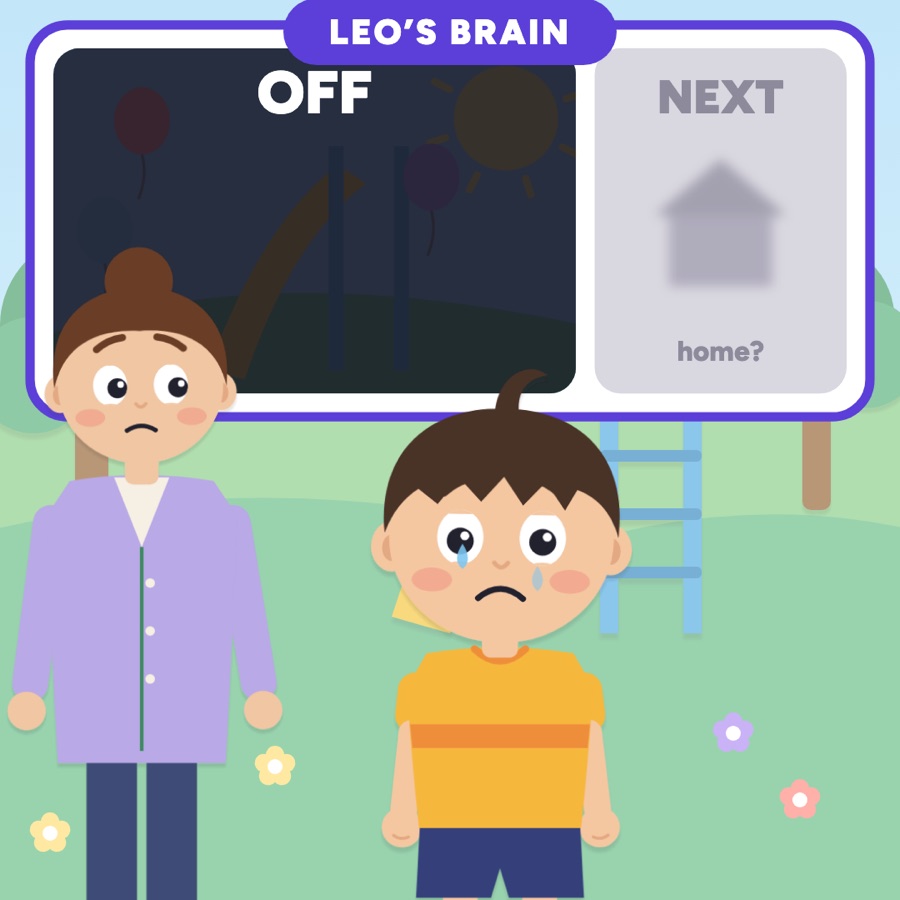
When you ask "Did you take the cookie?", a child with ADHD may answer before they've really thought at all. "No" pops out the way a hand shoots up in class. By the time they realize what they said, they feel stuck with it.
Avoiding trouble right now
Kids with ADHD tend to focus strongly on the present moment. In that moment, avoiding a parent's disappointment feels enormous. The bigger trouble that comes when the lie is found out feels far away.
There's another layer. Many kids with ADHD hear a lot of corrections every day: "sit down", "hurry up", "why didn't you…". When you're tired of being in trouble, a quick "no" can feel like self-protection.
Lies about forgetting
Some "lies" aren't lies at all. "Did you feed the dog?" "Yes!" Your child may honestly believe they did. Maybe they meant to. Maybe they thought about it on the way to the kitchen, then got distracted.
ADHD affects working memory, so the line between "I planned to" and "I did" can blur. Before calling it a lie, it can help to ask yourself whether they might simply have forgotten.
How to make the truth easier
Don't ask questions you already know the answer to. "Did you brush your teeth?" invites a quick "yes". Try a statement instead: "Your toothbrush is dry. Let's go brush." No lie needed.
Lower the cost of honesty. If telling the truth always leads to a big reaction, lying will keep looking like the better deal. Try: "I'm not going to be mad. I just want to know what happened." Then keep that promise.
Give a second chance to answer. When a quick "no" slips out, offer a pause: "Take a second. Want to try that answer again?" If your child corrects themselves, thank them for it.
Praise the truth, even when the news is bad. "Thank you for telling me you broke it. That was brave." The broken item still matters, but your child learns that honesty is noticed.
The goal isn't to catch the lie. It's to make the truth the easy way out.
What to try this week
- Swap questions for statements. For one daily moment, like teeth or homework, describe what you see instead of asking.
- Agree on a "do-over" phrase. Something like "rewind". If your child says it, they get to change their answer without trouble for the first one.
- Keep the consequence about the action. If they broke something, the consequence is about fixing it, not about the lie on top.
- Notice honest moments out loud. Every time your child tells a hard truth, say so.
Stay calm about the label
Try not to call your child a liar, even in frustration. Kids often live up, or down, to the labels they hear. "That wasn't true, and I know you can do better" leaves room to change. "You're a liar" doesn't.
When to look closer
If lying is happening alongside other big worries, like serious behavior problems, trouble at school, or a child who seems anxious or unhappy, talk to your child's doctor. They can help you look at the whole picture and find the right support.
Make the truth the easy way out.
CareTec turns your child's routine into steps they can see, one at a time — and shows you what's working.
Build your child's routine →Talwar, V., & Lee, K. (2008). Social and cognitive correlates of children's lying behavior. Child Development, 79(4).
Barkley, R. A. (1997). Behavioral inhibition, sustained attention, and executive functions: Constructing a unifying theory of ADHD. Psychological Bulletin, 121(1).
Barkley, R. A. — Taking Charge of ADHD (4th ed., Guilford Press, 2020).
American Academy of Pediatrics — HealthyChildren.org: ADHD
Published 2026-11-09 · Educational content, not medical advice.