One instruction at a time: the working-memory rule for kids with ADHD
You give three simple instructions. Your child comes back having done one, and can't remember why they went upstairs. There's a reason.
"Go upstairs, brush your teeth, and grab your backpack." Two minutes later: teeth brushed, no backpack, and a very confused kid on the landing.
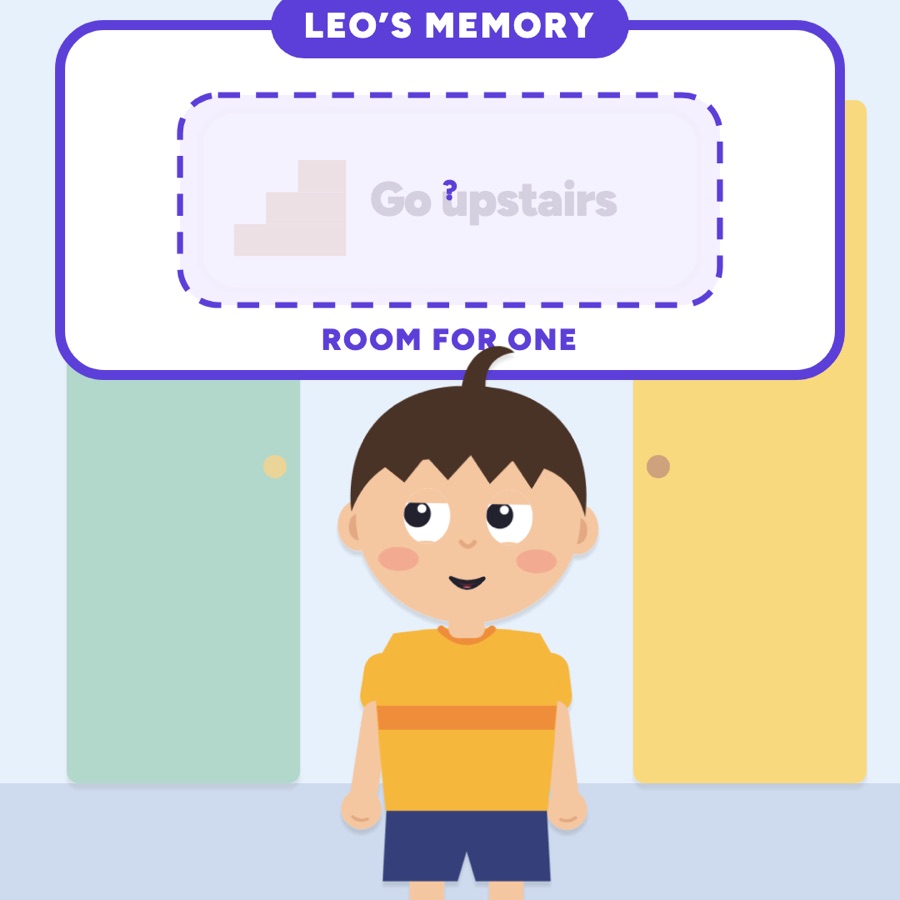
Working memory has limited room
Working memory is the mental notepad that holds a plan while you carry it out. Studies have repeatedly found it's weaker on average in children with ADHD. Three instructions at once is three things on a very small notepad. The first one often survives. The others slide off.
It isn't defiance
From the outside, it looks like selective listening. From the inside, the second and third instructions are simply gone. Repeating them louder doesn't add space to the notepad.
The rule: one step, then the next
- Give one instruction. Wait until it's done.
- Then give the next one. "Teeth: done. Now shoes."
- Better still, make the list visible. Three pictures on the wall, at their eye level. They check one, then look for the next. You stop being the reminder.
- Celebrate the finish line. A check mark, a high five. Finishing a step should feel good.
Fewer words, one at a time, where they can see them.
This also works for homework ("just the first line"), bedtime and leaving the house. When the steps live outside their head, their head is free to do them.
One step at a time, where they can see it.
CareTec turns your child's routine into steps they can see, one at a time — and shows you what's working.
Build your child's routine →Martinussen, R. et al. (2005). A meta-analysis of working memory impairments in children with ADHD. JAACAP, 44(4).
Kofler, M. J. et al. (2011). Working memory deficits and social problems in children with ADHD. Journal of Abnormal Child Psychology, 39.
Barkley, R. A. — Taking Charge of ADHD (4th ed., Guilford Press, 2020).
Published 2026-11-06 · Educational content, not medical advice.