How to praise a child with ADHD (so it actually lands)
Many kids with ADHD hear far more corrections than compliments in a day. Praise can rebalance that, as long as it's the right kind.
Think back over today. How much of what you said to your child started with "stop", "don't", "hurry up" or "how many times do I have to tell you"?
If the honest answer is "most of it", you're in good company. When a child has ADHD, the day is full of things that need correcting, and correcting takes up all the airtime. The good moments are quieter, so they slip past.
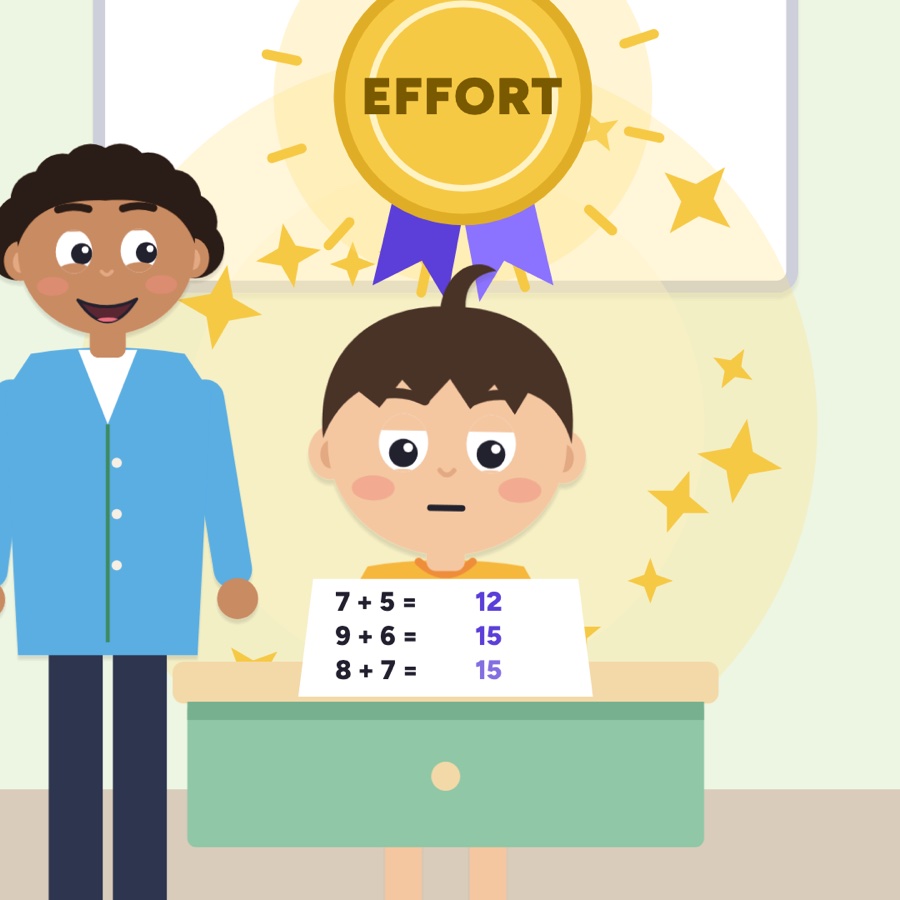
Why praise matters more with ADHD
Children with ADHD often get a steady stream of negative feedback: at school, at home, from friends. Over time, many start to believe the message behind it: "I'm the kid who gets it wrong."
Praise is one of the simplest ways to push back on that story. It also does something practical. Behavior that gets noticed tends to happen again. That's the idea at the heart of behavioral parent training, which reviews of the research describe as one of the best-supported approaches for children with ADHD.
But not all praise works equally well. "Good job!" shouted from the kitchen often doesn't land at all.
"Good job" is too vague
"Good job" tells your child that something went well. It doesn't tell them what. For a brain that already struggles to connect actions with outcomes, that's a missed chance.
Compare:
- "Good job!"
- "You put your shoes by the door without me asking. That made our morning so much easier."
The second one names the exact behavior. Your child knows what to do again tomorrow. Psychologists sometimes call this "labeled praise": you describe the behavior you liked, out loud.
Sooner is better
Psychologist Russell Barkley stresses that kids with ADHD need feedback that is immediate and frequent. Praise at dinner for something that happened at 4 p.m. is a lot weaker than praise in the moment. By dinner, the moment is gone.
So when you see it, say it. Right then, even if it's short. A quick "nice, you started your reading on your own" while walking past the table counts.
Praise the effort, not the label
"You're so smart" feels kind, but it's about something your child can't control. When the next task is hard, "smart" can quietly turn into "so if I'm struggling, I must not be smart."
Effort is different. Your child can choose to keep going, try another way, or ask for help. Praising those choices tells them the struggle is normal and the trying is what counts.
- Instead of "You're so smart", try "You kept going even when that one was hard."
- Instead of "You're such a good boy", try "You waited for your turn. I saw that."
- Instead of "Finally!", try "You finished the whole page. How does that feel?"
Look for the small things
Kids with ADHD don't always get the big wins. If you only praise the finished homework or the perfect morning, praise may be rare.
So lower the bar for what's worth noticing. Sitting down to start. Putting one thing away. Calming down a little faster than last time. Saying sorry after an outburst. These are real efforts, and for a child with ADHD, they can take a lot.
What to try tonight
- Catch three good moments. Before bedtime, look for three small things your child does well, and say each one out loud, right away.
- Name the behavior. Swap "good job" for one sentence that says exactly what they did.
- Praise one effort, not a result. "You tried twice before asking for help" is worth saying even if the answer was wrong.
- Add a touch. A high five, a hand on the shoulder, a smile. For some kids, that lands even better than words.
The goal isn't more praise. It's praise your child can actually use.
When praise feels forced
Some evenings, finding something to praise feels impossible. That's normal, especially after a hard day. Start smaller. "Thanks for coming to the table" is real, and it counts.
If your child brushes praise off or seems embarrassed by it, keep it low-key. A quiet comment, or a note on their pillow, can work better than a big celebration in front of siblings.
And be honest. Kids notice when praise is empty. Specific, true and small beats big and generic every time.
Part of a bigger toolkit
Praise works best alongside clear routines, simple instructions and calm, predictable consequences. Together, those are the core of parent training in behavior management. The CDC recommends it as a first step for young children with ADHD, and your child's doctor or a therapist can help you find a program.
You don't have to change everything at once. Start with tonight: three moments, said out loud.
Notice the good, out loud.
CareTec turns your child's routine into steps they can see, one at a time — and shows you what's working.
Build your child's routine →Pelham, W. E., & Fabiano, G. A. (2008). Evidence-based psychosocial treatments for attention-deficit/hyperactivity disorder. Journal of Clinical Child & Adolescent Psychology, 37(1).
Barkley, R. A. — Taking Charge of ADHD (4th ed., Guilford Press, 2020): immediate, frequent feedback and attention to good behavior.
CDC — Behavior therapy first for young children
Published 2026-11-08 · Educational content, not medical advice.