How to explain ADHD to your child (in words they'll actually understand)
The diagnosis is in. You've read the leaflets. Now there's a harder conversation waiting: how do you explain ADHD to the child who has it?
Many parents wait a long time before talking to their child about ADHD. They worry the word will feel like a label. They worry their child will feel different, or use it as an excuse.
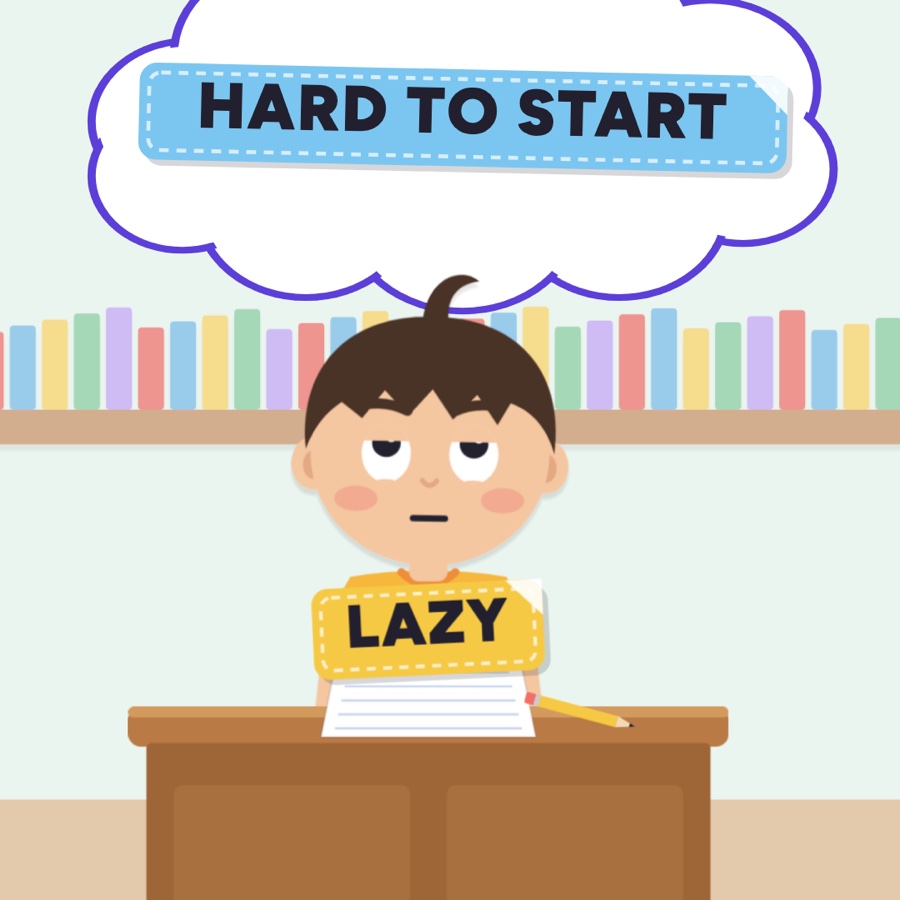
But kids usually know something is going on. They notice when homework takes them twice as long. They hear "focus!" more than their friends do. Without an explanation, many fill the gap on their own, and the story they invent is often harsh: "I'm lazy." "I'm bad." "I'm not smart."
A calm, honest explanation can replace that story with a kinder, truer one.
Why the conversation matters
ADHD is a difference in how the brain manages attention, activity and self-control. Psychologist Russell Barkley describes it as a problem with self-regulation: knowing what to do, but having a harder time doing it at the right moment.
The American Academy of Pediatrics guideline for ADHD treats it as a long-term condition that families manage together, with the child involved more and more as they grow. That starts with understanding. A child who knows why some things feel hard is in a better position to ask for help, and to be gentle with themselves.
Keep it short and concrete
You don't need to give a lecture about brain chemistry. Young children understand pictures better than definitions. Some families like these:
The race car brain. "Your brain is like a really fast race car. It has a powerful engine. The brakes are still getting stronger. That's why it's sometimes hard to stop and wait."
The TV with many channels. "Your brain notices everything at once, like a TV switching channels. That's why it's hard to stay on homework when the dog walks by."
Pick one image and stick with it. You'll come back to it many times.
Say what ADHD is not
This part is just as important. Say it plainly:
- It's not your fault.
- It doesn't mean you're not smart.
- It doesn't mean you're bad.
- Lots of people have it, including grown-ups who do all kinds of jobs.
Kids with ADHD often hear corrections all day. Hearing "this is not about who you are" can bring real relief.
Point to the strengths
Every child has things they're good at. Maybe your child notices details nobody else sees. Maybe they're funny, creative, brave, or full of energy on the soccer field.
Be careful not to promise that ADHD is a "superpower". Some days it really doesn't feel like one, and kids know that. Instead, be specific: "Your brain is great at coming up with new ideas. It has a harder time with waiting. We'll work on the waiting together."
Make it a "we" problem
The most reassuring message is that your child isn't alone with this. "Some things are harder for your brain. That's okay. We'll find tools that help, and your teacher and your doctor are on the team too."
Then show what that means. Choose one tool together, like a picture checklist for the morning or a timer for homework. When it works, point it out: "See? The checklist did the remembering for you."
What to try this week
- Choose your picture. Race car, TV channels, or something your child loves. Practice saying it in two or three sentences.
- Pick a calm moment. Not right after a meltdown or a bad report card. A car ride or a quiet bedtime works well, when nobody has to make eye contact.
- Invite questions, even later. "You can ask me about this anytime." Many kids come back days later with a question that's been on their mind.
- Choose one tool together. Let your child help pick it. Kids are more likely to use a tool they chose.
Questions your child might ask
"Will it go away?" You can be honest: "Lots of kids learn ways to manage it, and it often gets easier as you grow. We'll keep figuring it out." Avoid promising either way.
"Do I have to take medicine?" If medication is part of the plan, or might be, let your child's doctor help explain it. You can say: "The doctor will help us decide what's best for you."
"Can I tell my friends?" It's their story to share, or not. Help them think about who they trust, and practice a simple sentence like "My brain works a bit differently. It's called ADHD."
Keep talking
This isn't a one-time conversation. Your child will understand more as they grow, and their questions will change. A short check-in every few months keeps the door open.
And if your child seems anxious, sad, or very upset about the diagnosis, talk to your child's doctor. They can help you find the right words and the right support.
Give your child the right words.
CareTec turns your child's routine into steps they can see, one at a time — and shows you what's working.
Build your child's routine →Barkley, R. A. — Taking Charge of ADHD (4th ed., Guilford Press, 2020).
Wolraich, M. L. et al. (2019). Clinical practice guideline for the diagnosis, evaluation, and treatment of attention-deficit/hyperactivity disorder in children and adolescents. Pediatrics, 144(4).
American Academy of Pediatrics — HealthyChildren.org: ADHD
Published 2026-11-10 · Educational content, not medical advice.