How to discipline a child with ADHD (without yelling every day)
No screens for a week. Then a lecture. Then the same thing happens the next day. If discipline feels like it never sticks, the problem may be the kind of consequence, not your child.
Your child hits their sister over a toy. You take away the tablet for the rest of the week. By Wednesday, nobody remembers why, the tablet is the only thing anyone argues about, and the hitting has happened again.
Most parents of kids with ADHD know this loop. You try harder consequences, then louder ones. Nothing seems to land. That isn't because your child doesn't care. It's because many classic punishments are built for a brain that plans ahead, and ADHD makes that harder.
Why big punishments don't stick
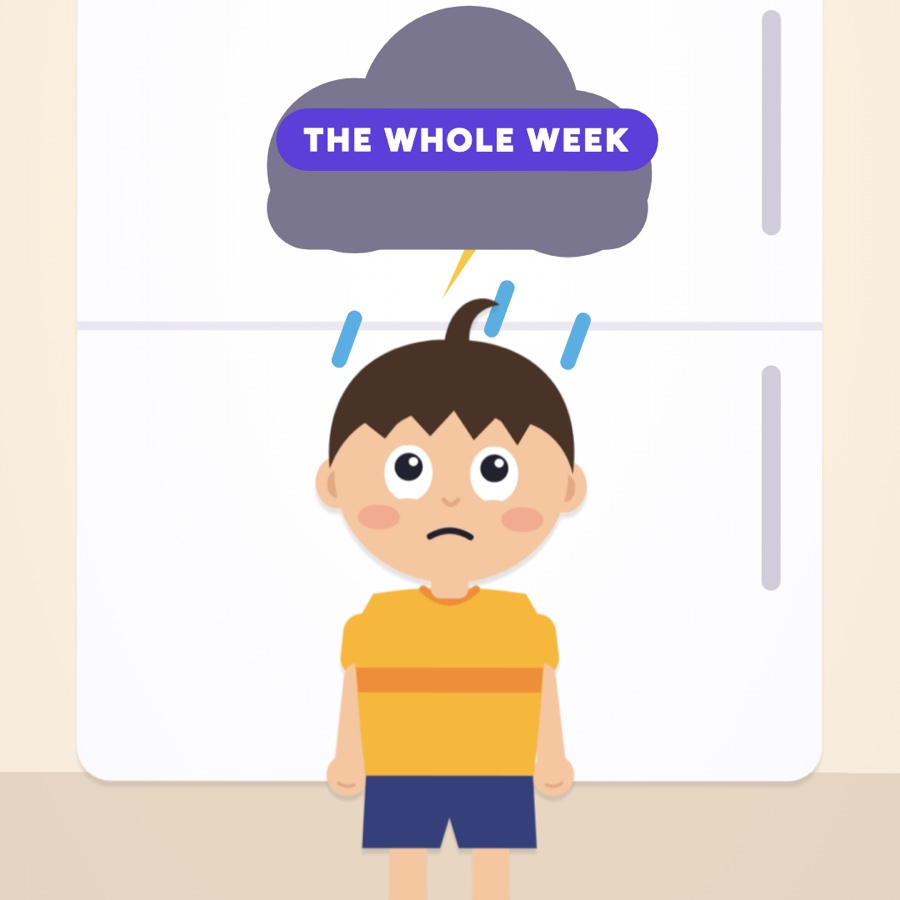
Psychologist Russell Barkley describes ADHD as, in part, a difficulty acting on the future. Kids with ADHD tend to live strongly in the present moment. A consequence that lasts a week stretches far into a future that doesn't feel real to them.
So a week without screens doesn't feel like "a reminder to be gentle with my sister". After the first day, it just feels like an unfair cloud hanging over everything. The link between the action and the consequence fades, and resentment fills the gap.
Long consequences also leave you with nothing left to use. If the tablet is already gone for the week, what happens tomorrow?
Why yelling and spanking backfire
When you're exhausted, yelling feels like the only tool left. But the American Academy of Pediatrics advises against harsh verbal discipline and physical punishment. A 2018 AAP policy statement on effective discipline explains that these approaches don't improve behavior over time and can make things worse.
A large 2016 meta-analysis by Elizabeth Gershoff and Andrew Grogan-Kaylor found that spanking was linked to more behavior problems in children, not fewer.
None of this is about blaming parents. Raising a child with ADHD is hard, and everyone loses their temper sometimes. It's about finding tools that work better for both of you.
What works better with ADHD
Research on behavioral parent training, one of the main recommended approaches for ADHD in children, points to a few clear principles. The CDC recommends this kind of training as a first step for young children with ADHD.
Small. A consequence doesn't need to be big to work. Five minutes away from the game, or losing the first turn tomorrow, is often enough. Small consequences can be used again, and they don't wreck the whole day.
Immediate. The closer the consequence is to the behavior, the clearer the lesson. "Because you threw the ball inside, it goes on the shelf for ten minutes" makes sense right now. "No birthday party on Saturday" doesn't.
Calm. Say it in a flat, boring voice. For many kids with ADHD, a big emotional reaction from a parent can be more interesting than the consequence itself.
Predictable. Kids do better when they know the rule and the consequence ahead of time. Surprises feel unfair. Rules decided together, when everyone is calm, feel like a plan.
Balance it with a lot of positive attention
Consequences alone rarely change behavior. Behavioral programs for ADHD pair them with frequent praise and rewards for what's going right. Pelham and Fabiano's 2008 review of psychosocial treatments for ADHD found strong evidence for these combined behavioral approaches.
In practice, that means catching your child being good far more often than you catch them being difficult. "You asked for a turn instead of grabbing. That was great." It feels small. It adds up.
A consequence tells your child what to stop. Praise tells them what to do instead.
What to try this week
- Pick one behavior to focus on. Not ten. Hitting, or throwing things, or not coming to the table. Just one.
- Decide the consequence in advance. Make it small and quick: a few minutes away from the toy or the screen. Tell your child about it at a calm moment.
- Use one calm warning. "If you throw the ball again, it goes on the shelf." Then, if it happens, follow through without a speech.
- Wipe the slate clean. When the consequence is over, it's over. No reminders, no grudges. A fresh start helps your child try again.
Keep the lecture short
After something goes wrong, it's tempting to explain at length why it matters. But long talks are hard for kids with ADHD to follow, especially when they're upset. One sentence is enough: "We don't hit. Next time, come get me." You can talk more later, when everyone is calm.
When you need more support
If discipline feels like a daily battle, you don't have to figure it out alone. Behavioral parent training programs teach these skills step by step, with a coach who helps you adjust them for your family.
Talk to your child's doctor about what's available near you. Asking for help isn't a sign that you've failed. It's one of the most useful things you can do.
Small, calm, right away.
CareTec turns your child's routine into steps they can see, one at a time — and shows you what's working.
Build your child's routine →Sege, R. D., Siegel, B. S., et al. (2018). Effective discipline to raise healthy children. Pediatrics, 142(6).
Gershoff, E. T., & Grogan-Kaylor, A. (2016). Spanking and child outcomes: Old controversies and new meta-analyses. Journal of Family Psychology, 30(4).
Pelham, W. E., & Fabiano, G. A. (2008). Evidence-based psychosocial treatments for attention-deficit/hyperactivity disorder. Journal of Clinical Child & Adolescent Psychology, 37(1).
CDC — Behavior therapy first for young children
Published 2026-11-09 · Educational content, not medical advice.