When your family doesn't believe ADHD is real
It usually arrives at a family lunch, in a friendly voice, with everyone listening. You weren't ready, and your child heard it.
It comes out over dessert, usually from someone who loves your child.
"He just needs firmer boundaries." "We didn't have all these labels in our day." "Have you tried taking the tablet away?" Said lightly, in front of everyone, while your child is sitting four feet away with a fork in their hand.
And you're suddenly expected to defend a diagnosis, a doctor and your entire parenting, between the main course and the coffee.
You don't have to. There's a better way to handle this, and it starts with deciding what you're actually trying to achieve.
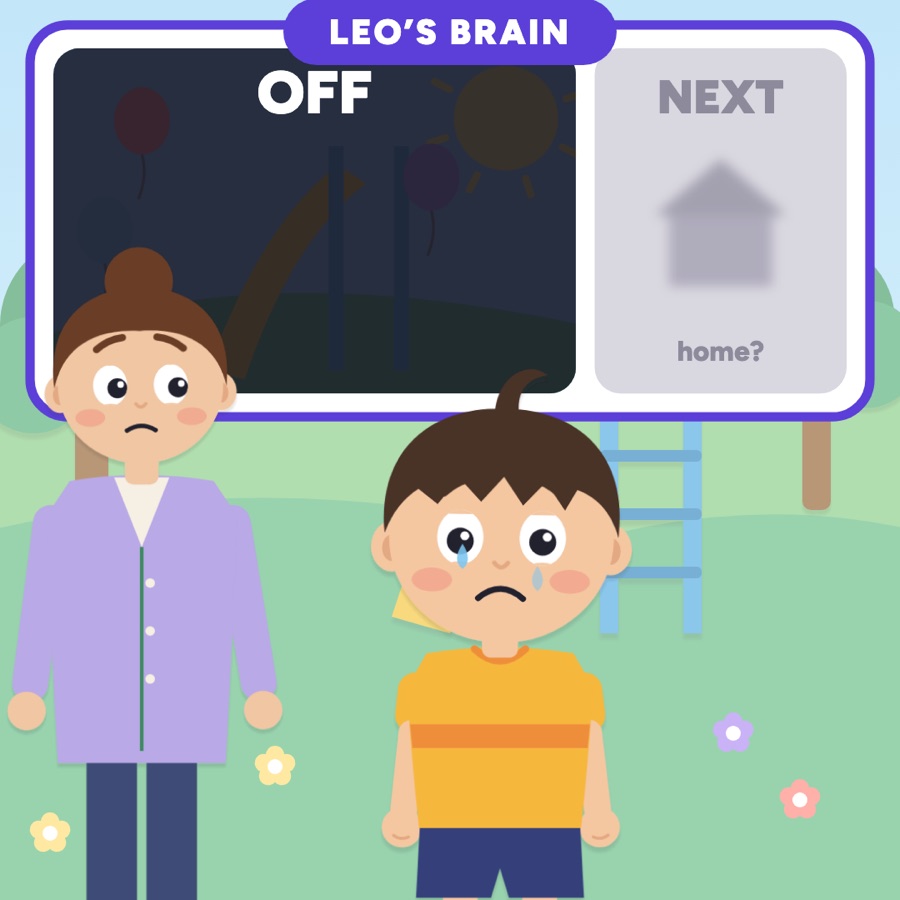
You're not trying to convince them
This is the shift that makes the whole thing easier.
You will probably not change a seventy-year-old's mind about child development at a family lunch. That's fine, because it was never the goal. There are only two things that matter in that moment:
- Your child hears, immediately and clearly, that you are on their side.
- The conversation ends before it becomes a performance.
Everything else — the evidence, the explaining, the hurt — can be dealt with later, privately, or not at all.
Parents who've been through this a few times describe the same lesson. Long explanations don't convince a skeptic; they just extend the time your child spends listening to adults debate whether their difficulties are real.
What the evidence says, for your own confidence
You don't need this material to win a lunch. You need it so the doubt doesn't take root in you at two in the morning.
The CDC describes ADHD as one of the most common neurodevelopmental disorders of childhood. Thapar and Cooper, in their 2016 review in The Lancet, describe it as a neurodevelopmental condition with a well-documented clinical picture and a substantial body of research behind it — not a modern label for ordinary naughtiness.
On the question of causes, Faraone and Larsson's 2019 review in Molecular Psychiatry reports that ADHD is highly heritable, with heritability estimated at around 74%. The 2021 World Federation of ADHD International Consensus Statement, written precisely because the public conversation is so full of misinformation, sets out the same picture: strong genetic contributions, differences in brain development, and effects that reach into adulthood.
Two things follow from that heritability figure, and both are worth sitting with.
First, it isn't parenting. Not screens, not sugar, not softness. Parenting shapes how hard the days are; it isn't what caused this.
Second — and this one is delicate — ADHD runs in families. Sometimes the relative insisting it doesn't exist is describing, without knowing it, their own childhood. "I was exactly like that and I turned out fine" is not evidence against the diagnosis. It's family history.
Why "we didn't have this in our day" feels true to them
Because something real changed, just not what they think.
What they remember is a classroom where a restless child was called lazy, sat at the back, hit with worse consequences than anyone would use now, and left school early. The child existed. The description didn't.
They also remember the ones who coped — and not the ones who didn't, because those children left and nobody followed up. Survivors are visible. The rest are a statistic nobody collected.
You can say a version of this out loud, kindly, and it lands better than any study: "They existed back then too. They just got called other things."
What to say
The one-line version, for the table. "It's a diagnosis from her doctor, not a label we picked." Calm, factual, hard to argue with, and it signals the subject is closed.
When they say it's a discipline problem. "If firmer boundaries fixed it, we'd have fixed it years ago. We're strict. This is something else." Owning the strictness removes their main assumption.
When they say they were the same and turned out fine. "That really wouldn't surprise me. It runs in families." Said warmly, this is both true and a remarkably effective end to the conversation.
When they criticise in front of your child. "Let's not do this in front of her." Five words, no debate. This is the one sentence that matters most, and your child will remember that you said it.
Afterwards, to your child. "What Grandad said about you isn't right, and I didn't like it. Your brain works the way it works, and you're not in trouble for it." Don't let it pass in silence. Silence reads as agreement.
When they want to help but don't know how. "The thing that helps most is sticking to the same routine when she's with you." People who feel useless often turn that feeling into criticism. A specific job can change the whole dynamic.
What to try this week
- Prepare one sentence and one example. Decide in advance what you'll say and the single concrete example you'll give — the two-hour homework session, the morning that needed fifteen reminders. One example beats a speech, because it's about your child rather than about ADHD in general.
- Debrief with your child after family events, briefly. "Anything anyone said that bothered you?" Children overhear far more than we think, and a two-minute conversation prevents a year of quiet conclusions.
- Give one skeptical relative one specific job. Keeping the same bedtime, reading the same story, following the routine chart when they babysit. Involvement converts opinions better than argument does.
- Send one thing to read, once. HealthyChildren.org's ADHD pages are plain, calm and come from pediatricians. Send it once with "this explained it well for us," then let it go. Sending five articles reads as a fight.
Questions parents ask
Should I cut contact with a relative who won't accept it? That's a judgement only you can make, and most families don't need to go that far. What helps more often is narrowing the subject: they can see your child, and the diagnosis isn't up for discussion. If a relative repeatedly criticises your child to their face, protecting your child from that is reasonable, and you don't owe anyone an argument about it.
Should I explain the diagnosis to my child's grandparents at all? Share what helps them care for your child — what the routine is, what helps a transition, what sets off a hard moment. You don't owe anyone the clinical detail. Practical information produces better behavior from adults than explanations of the condition do.
What if their doubt is making me doubt it too? That's extremely common, and it usually hits after a good week. If you want firmer ground, go back to the people who did the evaluation and ask your questions directly, write down what you see over two weeks, and bring that to your child's doctor. Doubt answered with information settles; doubt answered with arguing doesn't.
Your child is listening
That's the real stake in these conversations. Not whether your uncle comes around.
A child who hears an adult say "that's not fair, and not in front of her" learns that their difficulties are real and that someone stands between them and the commentary. A child who hears nothing draws the other conclusion, quietly, and keeps it.
One sentence. One example. Then the subject is closed, and the coffee comes.
One sentence, then change the subject.
CareTec turns your child's routine into steps they can see, one at a time — and shows you what's working.
Build your child's routine →Faraone, S. V., & Larsson, H. (2019). Genetics of attention deficit hyperactivity disorder. Molecular Psychiatry, 24(4), 562–575.
Faraone, S. V. et al. (2021). The World Federation of ADHD International Consensus Statement. Neuroscience & Biobehavioral Reviews, 128, 789–818.
Thapar, A., & Cooper, M. (2016). Attention deficit hyperactivity disorder. The Lancet, 387(10024).
CDC — ADHD: signs and symptoms
American Academy of Pediatrics — HealthyChildren.org: ADHD
Published 2026-11-13 · Educational content, not medical advice.