Why weekends and school breaks are harder with ADHD (and how to plan them)
Saturday morning, no alarm, no school bus, nothing planned. It sounds relaxing. Then by noon, everyone is shouting. If weekends feel harder than school days, you're not imagining it.
You'd think a day off would be the easy part. No rushing out the door. No homework battles. No teacher notes.
And yet many parents of kids with ADHD notice the same pattern. Weekends, holidays and summer break can bring more arguments, more meltdowns, and a child who seems wound up and lost at the same time.
There's a reason for that. And the fix isn't a packed schedule.
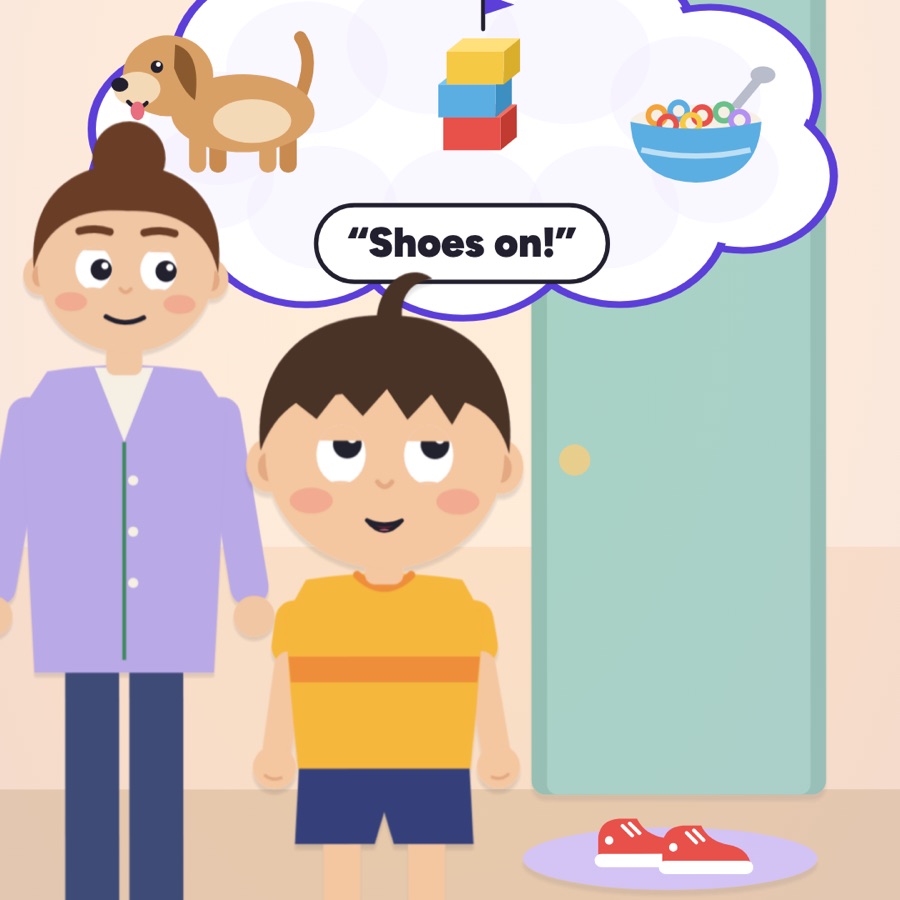
School gives a lot of hidden structure
A school day is full of signals. A bell rings. A teacher says what's next. Everyone moves together. Lunch is at the same time. Even kids who struggle at school are being guided from one thing to the next all day.
On a free day, all of that disappears at once. Nobody says what comes next. Your child has to decide, plan and start things on their own. That's exactly what ADHD makes hard.
Psychologist Russell Barkley describes ADHD as a problem with self-regulation and with time. A day without anchors asks a child to manage both, for hours.
Time slips away
Without a school timetable, many kids with ADHD lose track of time completely. The morning disappears into a game. Then suddenly it's time to leave for grandma's, and shoes, coat and car feel like an ambush.
This is why a lazy Saturday can still end in a meltdown. The day didn't feel long and easy. It felt like nothing, then everything at once.
Too much free time, too little to hold onto
Boredom often arrives too. A long stretch with no plan can lead to restlessness, sibling fights, or begging for screens. It's not that your child is ungrateful for the time off. Open-ended time is simply harder for an ADHD brain to fill.
Structure doesn't mean strict
Programs that help families with ADHD, like the parent training the CDC recommends as a first step for young children, often focus on predictable routines and clear expectations. William Pelham and Gregory Fabiano's 2008 review of treatments for ADHD described behavioral parent training as well established.
On weekends, that doesn't mean running the day like a school. It means giving the day a simple shape, so your child always knows roughly what's next.
Build a few anchors
Think of anchors as fixed points that stay the same, even on lazy days:
- Wake up and breakfast around the usual time
- Lunch and dinner at familiar times
- One outing or active moment
- A similar bedtime routine
Between the anchors, there's plenty of room for free play and fun. The anchors just stop the day from floating away.
What to try this weekend
- Draw the day's shape. On Friday evening or Saturday morning, sketch the day together in three or four big blocks: "Morning: pancakes and park. Afternoon: free play. Evening: movie night." Pictures work well for younger kids.
- Give a warning before every change. "In ten minutes, we leave for grandma's." Then again at five. Free days have more surprise transitions, so warnings matter more.
- Get moving early. An outing or active play in the morning often makes the rest of the day calmer. Kids with ADHD can struggle with long stretches indoors.
- Plan the last day of a break. Ease back into the school routine a day or two before school starts: earlier bedtime, backpack ready, a normal breakfast time.
Longer breaks need a little more
For summer or winter break, a loose weekly rhythm can help. Maybe Mondays are library day, Wednesdays are swimming, Fridays are a special outing. Kids with ADHD often do better when they can look forward to something specific.
A simple calendar on the wall, where your child can see what's coming, turns "what are we doing today?" into something they can check on their own.
Go easy on yourself
You don't have to fill every hour. Some free days will still be bumpy. The goal isn't a perfect weekend. It's a few more calm moments, and a child who feels a bit less lost.
If breaks are consistently very hard, with big behavior changes or a child who seems unhappy, talk to your child's doctor. They can help you think through what kind of support might make free time easier.
Give free days a simple shape.
CareTec turns your child's routine into steps they can see, one at a time — and shows you what's working.
Build your child's routine →Barkley, R. A. — Taking Charge of ADHD (4th ed., Guilford Press, 2020): time, structure and help at the "point of performance".
Pelham, W. E., & Fabiano, G. A. (2008). Evidence-based psychosocial treatments for attention-deficit/hyperactivity disorder. Journal of Clinical Child & Adolescent Psychology, 37(1).
CDC — Behavior therapy first for young children
American Academy of Pediatrics — HealthyChildren.org: ADHD
Published 2026-11-10 · Educational content, not medical advice.