Why can my child with ADHD focus on video games but not homework?
Three hours building in Minecraft without looking up. Then two minutes into a math sheet, they're under the table. Many parents ask the same thing: if they can focus on that, why not this?
It's one of the most confusing parts of ADHD. Your child can sit through a whole movie, build Lego for an afternoon, or play a video game until you physically unplug it. But ten minutes of reading? Impossible.
From the outside, it looks like they're choosing. "You can focus when you want to." Many kids with ADHD hear that sentence a lot.
The truth is more interesting, and a lot kinder.
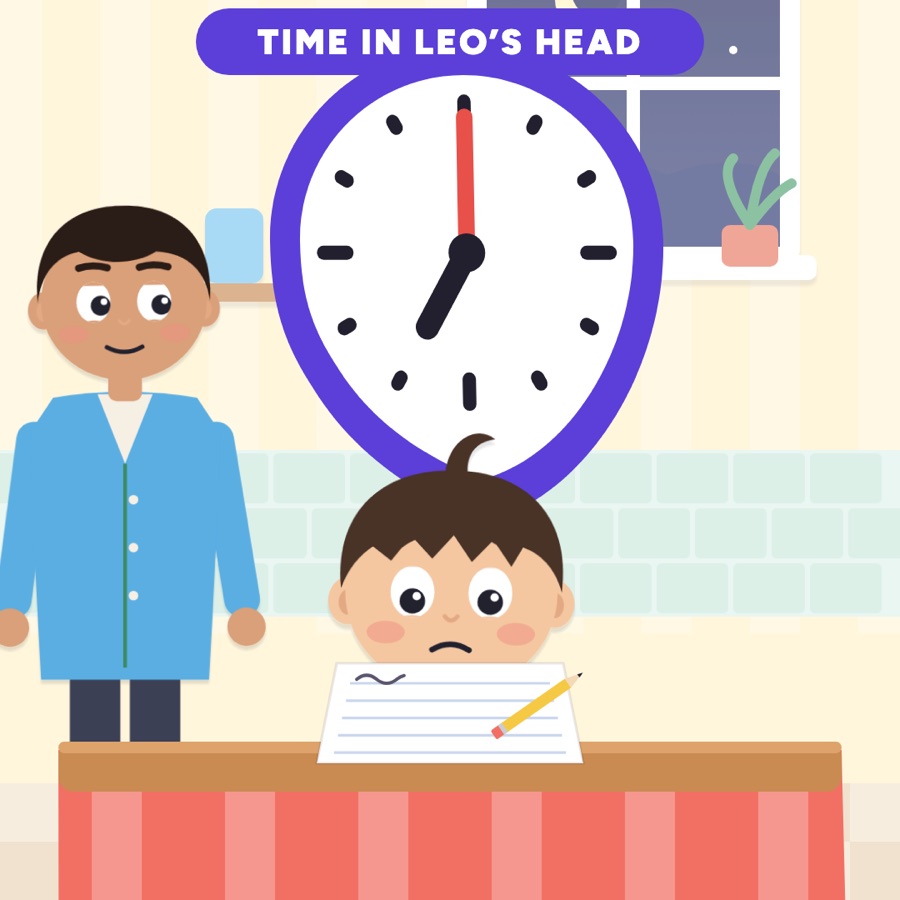
ADHD isn't a lack of attention
The name is misleading. Kids with ADHD don't have too little attention. They have trouble directing it, especially toward things that don't pull them in on their own.
Psychologist Russell Barkley describes ADHD as a problem with self-regulation. The hard part isn't paying attention to something exciting. It's making yourself pay attention to something boring, because you know it matters later.
Why games are so easy
Video games are built to hold attention. They give feedback every few seconds: points, sounds, a new level, a small win. There's always a clear next step and a reason to keep going.
Research has looked at the brain's reward system in ADHD. A study led by Nora Volkow, published in JAMA in 2009, found differences in dopamine pathways linked to reward and motivation in adults with ADHD. Researchers think this may help explain why tasks that feel rewarding right away are easier to stick with, and dull tasks are so much harder.
Homework is the opposite of a game. The reward, a good grade or learning something, comes much later. The feedback is slow. The next step isn't always clear.
Sometimes it goes too far: hyperfocus
Some kids with ADHD get so absorbed in something they love that they don't hear their name, forget to eat, or lose track of hours. People often call this hyperfocus.
It can be a real strength. It can also make stopping very hard. If the game ending feels like a crash, that's part of the same picture: switching away from something rewarding takes effort the ADHD brain finds hard to give.
Borrow the game's tricks
You can't make fractions as exciting as Minecraft. But you can use some of the same ingredients.
Make the finish line visible. Games always show how far you've got. Try the same with homework: "Five problems. Let's cross them off." A short, clear goal feels possible.
Give feedback fast. Don't wait until the end to say something good. "That one's done. Nice." Barkley stresses feedback that comes right away, at the moment the work happens.
Make it smaller. A game never asks you to do everything at once. Break homework into short rounds with a tiny break between them.
Add a little challenge. "Can you finish this row before the timer beeps?" A race against the clock can turn a dull task into a game.
Your child isn't choosing games over homework. Their brain is choosing what feels rewarding right now.
What to try tonight
- Do homework before screens, not after. Ending a game to start homework is twice as hard: you're stopping something fun and starting something dull. Swap the order when you can.
- Use a visible timer. Work for a short round, then a short break. Let your child see the time shrinking.
- Show progress. A sticker, a checkmark, or a line across the page after each section.
- Name the effort out loud. "That was a boring one and you finished it." Doing the hard thing deserves more praise than doing the easy thing.
Stop the "you can focus when you want" line
It's natural to say it. But it can leave your child feeling lazy or broken. Try something like: "Your brain loves games. Homework is harder for it. Let's make homework a bit more like a game."
When to talk to someone
If focus problems are making school very hard, or your child seems frustrated and down about their schoolwork, talk to your child's doctor and their teacher. Together, you can look at what kind of support would help.
Make the task feel closer.
CareTec turns your child's routine into steps they can see, one at a time — and shows you what's working.
Build your child's routine →Volkow, N. D. et al. (2009). Evaluating dopamine reward pathway in ADHD: Clinical implications. JAMA, 302(10).
Barkley, R. A. (1997). Behavioral inhibition, sustained attention, and executive functions: Constructing a unifying theory of ADHD. Psychological Bulletin, 121(1).
Barkley, R. A. — Taking Charge of ADHD (4th ed., Guilford Press, 2020): motivation and help at the "point of performance".
American Academy of Pediatrics — HealthyChildren.org: ADHD
Published 2026-11-10 · Educational content, not medical advice.