Why does my child with ADHD interrupt all the time?
You pick up the phone, and within seconds there's a tug on your sleeve. Again. If your child can't seem to wait their turn to talk, here's what's going on.
You start talking to another parent at pickup. "Mom. Mom. Mom." You're on a work call. A drawing appears an inch from your face. You sit down to tell your partner about your day, and the conversation is suddenly about dinosaurs.
Interrupting can feel rude. But for many kids with ADHD, it isn't about manners. It's about a thought that feels like it has to come out right now, or it will be gone.
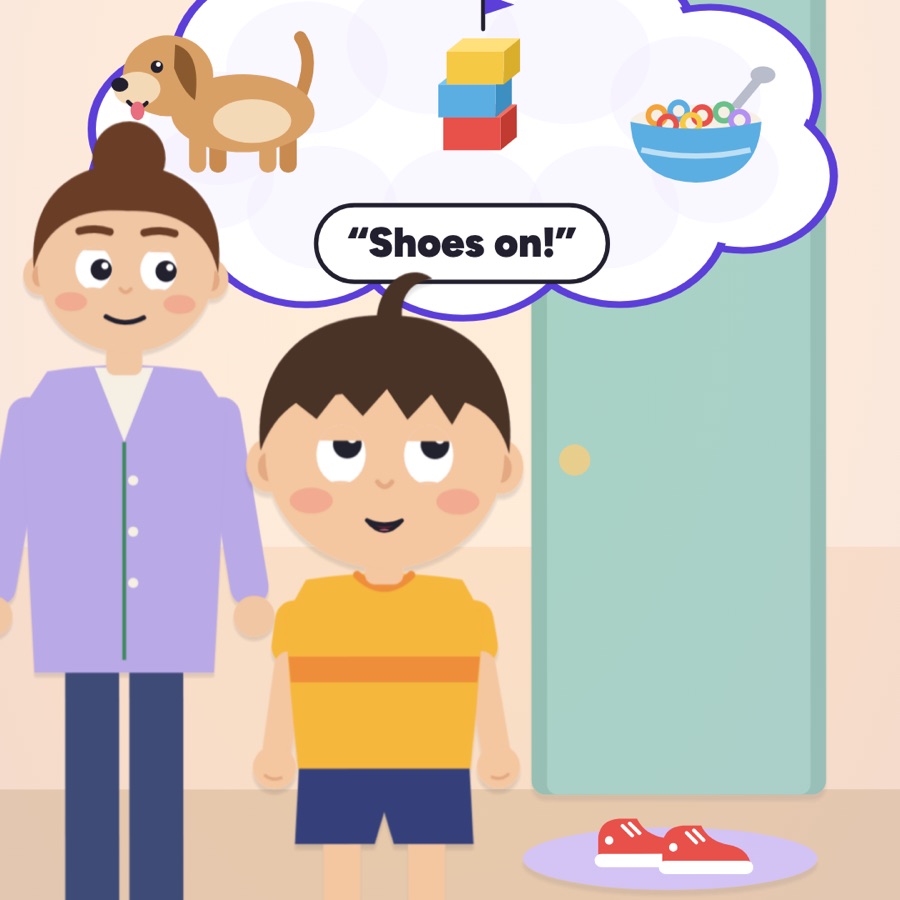
It's part of ADHD, not bad manners
Interrupting is so common with ADHD that it's written into the diagnosis. The DSM-5, the manual clinicians use to diagnose ADHD, lists "often interrupts or intrudes on others" and blurting out answers among the hyperactivity-impulsivity symptoms.
So when your child cuts in, they're not ignoring everything you've taught them. They know the rule. In the moment, the urge to speak arrives faster than the rule does.
The brakes come too late
Psychologist Russell Barkley describes ADHD as, at its core, a problem with behavioral inhibition: the ability to pause between an impulse and an action. Most of us have a small gap there. We think of something, notice the other person is talking, and wait.
For a child with ADHD, that gap can be very short. The thought appears, and the words are already out.
"If I wait, I'll forget"
There's a second reason, and kids often say it themselves: "But I'll forget!"
They're often right. ADHD is linked to weaker working memory, the mental notepad that holds information for a short time. A 2005 meta-analysis by Rosemary Martinussen and colleagues found clear working memory difficulties in children with ADHD.
If a thought might disappear in thirty seconds, holding it while you finish your phone call feels impossible. Interrupting is their way of not losing it.
Teach a way to wait
Give the thought somewhere to go. Keep a small notepad or whiteboard where your child can draw or write their idea while they wait. Younger kids can make a quick doodle. Once it's on paper, it can't be forgotten, and waiting gets much easier.
Use a silent "I see you" signal. Some families use a hand on the shoulder: your child places their hand on your arm, and you put your hand on top of theirs. It means "I know you're there, and you're next." Your child doesn't have to keep talking to stay in line.
Keep the first waits short. Waiting is a skill, and skills grow in small steps. Start by making them wait a few seconds, then keep your promise and turn to them. Over time, you can stretch it.
Prepare before the hard moments. Before a phone call, say: "I'm making a call. If you need me, use the hand signal. When I hang up, you're first." Give them something to do during the call, too.
Notice the waiting, not just the interrupting
Kids with ADHD hear "don't interrupt" many times a day. They rarely hear about the times they managed to wait. When your child uses the signal, or waits even a few seconds, say so: "You waited until I finished. Thank you. Now tell me."
That moment of attention is the reward. It shows that waiting works.
Interrupting is often a way of not losing a thought. Give the thought a safe place, and waiting gets easier.
What to try this week
- Put a notepad where interrupting happens most. By the phone, on the dinner table, in the car.
- Agree on a waiting signal. Practice it once as a game when everyone is calm.
- Pre-warn before calls and conversations. Say how long, what they can do, and when it will be their turn.
- Turn to them quickly when they wait. At first, follow through within seconds. Keep that promise every time.
Be realistic
Even with good tools, your child will still interrupt sometimes, especially when tired, excited or hungry. That's normal. When it happens, a calm "Hand signal, please" works better than a lecture.
If interrupting is causing real trouble at school or with friends, mention it to your child's teacher and doctor. Behavioral strategies, including parent training, are a recommended first step for young children with ADHD.
Hold the thought, then share it.
CareTec turns your child's routine into steps they can see, one at a time — and shows you what's working.
Build your child's routine →American Psychiatric Association (2013). Diagnostic and Statistical Manual of Mental Disorders (5th ed.): "often interrupts or intrudes on others" among the hyperactivity-impulsivity symptoms.
Barkley, R. A. (1997). Behavioral inhibition, sustained attention, and executive functions: Constructing a unifying theory of ADHD. Psychological Bulletin, 121(1).
Martinussen, R. et al. (2005). A meta-analysis of working memory impairments in children with ADHD. JAACAP, 44(4).
CDC — Behavior therapy first for young children
Published 2026-11-09 · Educational content, not medical advice.