Taking a child with ADHD to the store (without the meltdown in aisle five)
You only needed milk and bread. Twenty minutes later, your child has opened a bag of chips, hidden in a clothes rack and melted down at the checkout. Public places can be some of the hardest moments with ADHD.
The grocery store. The pharmacy. A restaurant. A sibling's recital. For many families of kids with ADHD, these are the places where things fall apart.
Hands grab at everything. Your child darts off around the corner. Then the candy at checkout, the "please, please, please," and the meltdown while strangers watch.
It's exhausting, and it can feel embarrassing. But there's a reason stores are so hard, and a plan that can make them easier.
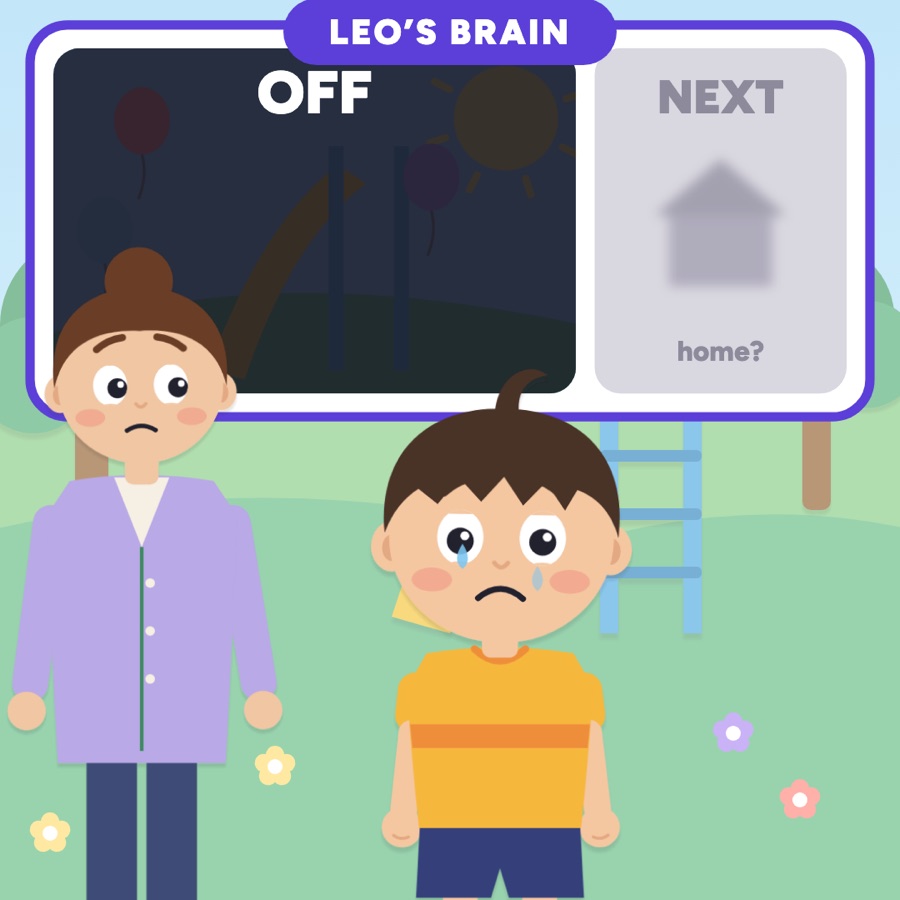
A store is built to grab attention
Think about what a store is designed to do. Bright packaging. Things at eye level. Treats placed right where kids stand in line. It's all made to catch attention and spark wanting.
For a child with ADHD, who already finds it hard to filter out distractions and hold back impulses, a store can feel like a hundred voices all saying "Look at me! Grab me!"
Add waiting in line, noise, and a parent who is distracted by the shopping list, and you have a very hard setting for a brain that struggles with self-control.
Rules said inside come too late
Many parents explain the rules once things are already going wrong: "Stop touching that! I told you not to run!"
Psychologist Russell Barkley talks about helping kids with ADHD at the "point of performance," the exact moment and place where a behavior happens. A rule spoken at home, an hour earlier, can be long gone by the time you reach the cereal aisle.
In his parent training program, described in his book Defiant Children, Barkley suggests a simple routine for public places: stop just before you go in, review a few rules, agree on what your child can earn, and give them something to do inside.
Step 1: Rules at the door
Before you walk in, stop. In the car or right outside the door, go over two or three short rules. Keep them simple and positive:
- "Stay where you can touch the cart."
- "Hands to yourself, unless I ask for help."
- "We're not buying treats today."
Then ask your child to say them back to you. This takes thirty seconds and puts the rules fresh in their mind right when they need them.
Step 2: A job inside
A bored child with ADHD will find something to do, and you might not like what they pick. So give them a job.
- Push the cart (if they're big enough)
- Find three things on the list
- Hold the coupons
- Count the apples into the bag
- Look for the shortest checkout line
Busy hands and a clear task leave less room for grabbing and running.
Step 3: Something to look forward to
Agree on a small reward for following the rules. It doesn't have to be candy. It could be choosing the music on the drive home, picking dinner tonight, or ten extra minutes of play.
Make it clear and visible: "If you stay by the cart and keep your hands to yourself, you get to choose the song in the car." Give gentle reminders inside: "You're doing great. Song choice is coming."
If things go wrong
Sometimes, even with a plan, it falls apart. That's okay.
- Stay as calm as you can. A quiet voice works better than a loud one.
- Give one clear reminder of the rule.
- If needed, step to a quiet corner or out to the car for a short break.
- Don't give in to begging. If the treat comes after the meltdown, the meltdown learns that it works.
Later, when everyone is calm, talk briefly about what happened. No lecture. Just "That was hard. Next time, let's try…"
What to try this week
- Start with short trips. A quick stop for two items is a better practice run than a big weekly shop.
- Pick the right time. Avoid going when your child is hungry, tired or right after school, if you can.
- Make a picture list. Younger kids can carry a list with pictures and check things off. It keeps them busy and part of the mission.
- Celebrate success right away. When the trip goes well, say exactly what went right: "You stayed by the cart the whole time. That was really helpful."
You're not alone in the aisle
Plenty of parents have walked out of a store with a screaming child and a half-full cart. It doesn't mean you're doing anything wrong. It means public places are hard for your child's brain, and they need more support there, not more scolding.
If outings are very difficult most of the time, ask your child's doctor about parent training in behavior management. The CDC recommends it as a first step for young children with ADHD.
Set the rules before the door.
CareTec turns your child's routine into steps they can see, one at a time — and shows you what's working.
Build your child's routine →Barkley, R. A. (2013). Defiant Children: A Clinician's Manual for Assessment and Parent Training (3rd ed.). Guilford Press.
Barkley, R. A. — Taking Charge of ADHD (4th ed., Guilford Press, 2020): help at the "point of performance".
CDC — Behavior therapy first for young children
American Academy of Pediatrics — HealthyChildren.org: ADHD
Published 2026-11-11 · Educational content, not medical advice.