Why does my child with ADHD give up so easily? (And how to build frustration tolerance)
The puzzle is half done. Then one piece won't fit, and suddenly: "I quit! This is stupid!" For many kids with ADHD, frustration arrives fast and all at once.
It starts with a small snag. A word they can't sound out. A Lego piece that won't snap in. A math problem that doesn't come right away.
And then it's over. The pencil goes down. The tears come. "I can't do it. I'm never doing this again."
If your child with ADHD gives up the moment something gets hard, you're not alone. And it's not because they don't care.
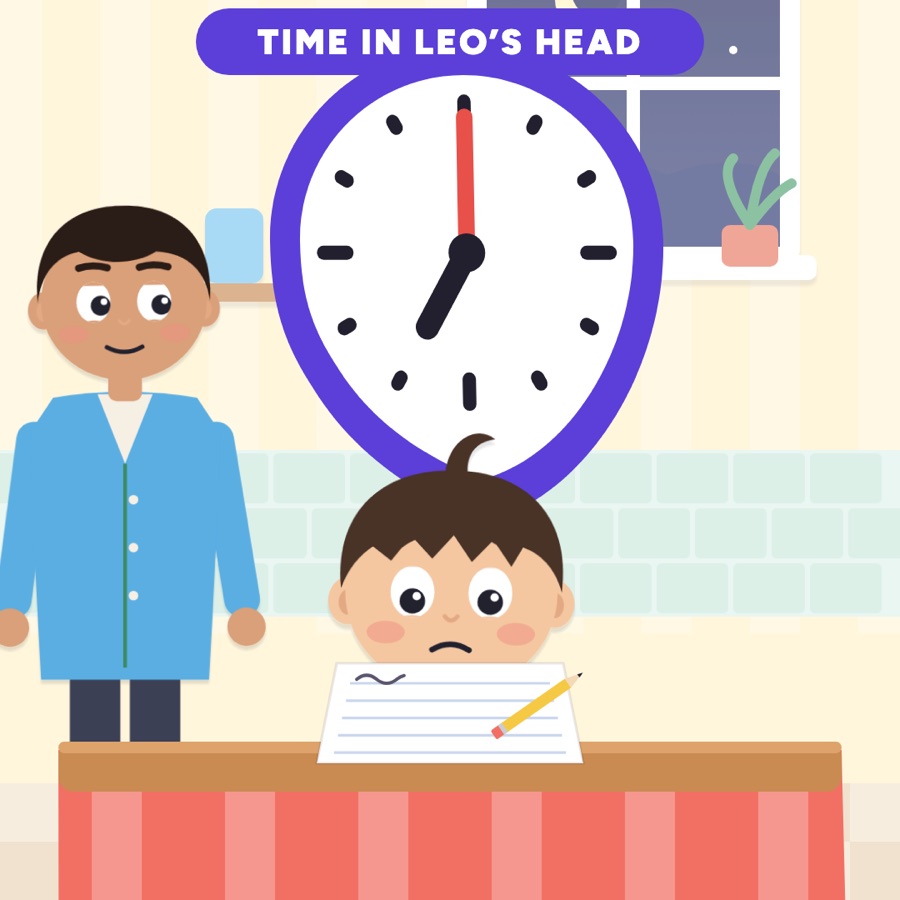
Frustration rises fast with ADHD
In a 2014 review in the American Journal of Psychiatry, Philip Shaw and colleagues described emotion dysregulation as common in ADHD. In plain words: feelings can rise quickly, feel very strong, and take longer to settle.
Frustration is one of those feelings. Most kids feel a little annoyed when something is hard, then keep going. For many kids with ADHD, the annoyance can jump straight to "I quit" in seconds.
"Too hard" feels like forever
Psychologist Russell Barkley describes ADHD as a problem with self-regulation, including the ability to keep the future in mind. That matters here.
When something is hard, sticking with it means believing it will get easier soon. But if your brain lives mostly in the now, the hard part feels like it will never end. The finish line disappears. All that's left is this frustrating moment.
Past setbacks pile up
Many kids with ADHD hear a lot of "try harder," "you're not paying attention," and "you could do it if you wanted to." Over time, some start to expect failure. Giving up early can feel safer than trying and getting it wrong again.
So when your child quits, it might not be laziness. It might be protection.
What helps
The goal isn't to make your child never feel frustrated. Frustration is part of learning. The goal is to help them stay in the hard spot a little longer, and to find out that they can get through it.
Make the task smaller. "Do your math homework" is a mountain. "Do the first two problems" is a hill. For a child with ADHD, a smaller, visible chunk makes the finish line easier to see.
You can cover the rest of the page with a sheet of paper, or fold the worksheet so only a few problems show.
Name the feeling before fixing the problem. When your child is frustrated, jumping straight to a solution can feel like you're not listening. Try naming the feeling first: "That piece won't fit and it's so annoying." It can help bring the feeling down a notch.
Praise the sticking, not the result. In well-known studies published in 1998, Claudia Mueller and Carol Dweck found that children praised for being smart were more likely to give up after a setback than children praised for their effort.
So instead of "You're so smart," try "You kept trying even when it was hard. That's tough to do." You're teaching your child what matters.
Plan a break before the meltdown. A short, planned break is very different from quitting. "Let's do two more, then take a stretch break" keeps the task on the table while giving their brain a breather. You can even let your child ask for one: "When it feels too hard, you can say 'break' and we'll come back in two minutes."
What to try this week
- Use the "just one more" step. When your child wants to quit, ask for one more small step, not the whole thing. Then celebrate it.
- Show their progress. Point to what's already done: "Look, you already finished five." It's easy for kids with ADHD to forget how far they've come.
- Share your own struggles. Talk out loud about something hard for you: "This recipe isn't working. I'm frustrated. I'll try one more time." Your child sees that frustration is normal and survivable.
- Pick a "frustration phrase" together. Something your child can say to themselves, like "Hard isn't impossible" or "I can do one more." Practice it when things are calm.
A skill that grows
Frustration tolerance is a skill, and skills grow with practice. Some days your child will push through. Some days they won't. Both are part of learning.
If frustration often leads to big outbursts that are hard to manage at home or school, talk to your child's doctor. The CDC notes that parent training in behavior management is a recommended first step for young children with ADHD, and it can help with exactly these moments.
Make the next step smaller.
CareTec turns your child's routine into steps they can see, one at a time — and shows you what's working.
Build your child's routine →Shaw, P. et al. (2014). Emotion dysregulation in attention deficit hyperactivity disorder. American Journal of Psychiatry, 171(3).
Barkley, R. A. — Taking Charge of ADHD (4th ed., Guilford Press, 2020).
Mueller, C. M., & Dweck, C. S. (1998). Praise for intelligence can undermine children's motivation and performance. Journal of Personality and Social Psychology, 75(1).
CDC — Behavior therapy first for young children
Published 2026-11-11 · Educational content, not medical advice.