"I'm bored!": why kids with ADHD struggle so much with boredom
A room full of toys, a shelf full of books, and still: "I'm booored." For many kids with ADHD, boredom isn't a small complaint. It can feel almost unbearable.
The tablet goes off. The playdate ends. The car ride starts. And within minutes, you hear it: "I'm bored. There's nothing to do."
Every child gets bored. But for many kids with ADHD, boredom hits faster and harder. It can lead to whining, picking fights with siblings, or climbing the furniture just to make something happen.
It isn't ingratitude. There's a real reason boredom feels so intense.
Waiting can feel worse with ADHD
Researcher Edmund Sonuga-Barke proposed a "dual pathway" model of ADHD in 2002. One of its ideas is delay aversion: many children with ADHD find waiting especially unpleasant, and will often do a lot to escape it.
Boredom is a kind of waiting. Nothing is happening, and the brain wants something to happen now. For a child with ADHD, that empty feeling can be uncomfortable enough that any stimulation, even getting in trouble, feels better than nothing.
Too many choices, no way to start
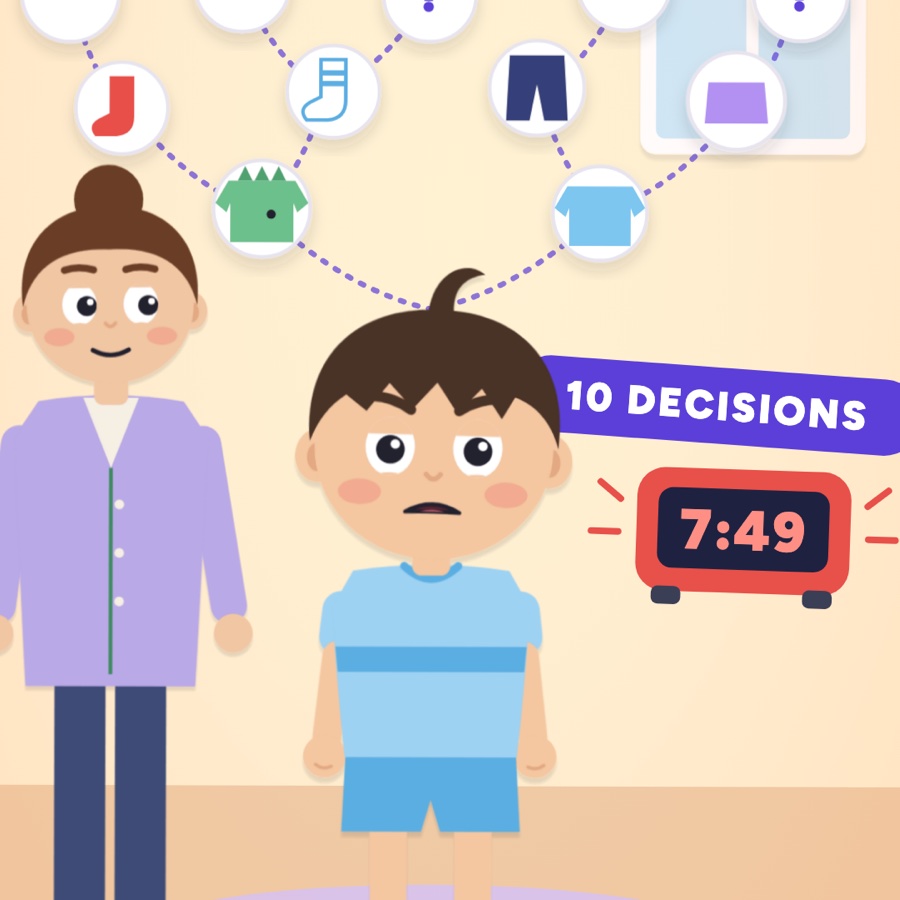
Here's the twist. Kids with ADHD often say they're bored in a room full of things to do.
The problem isn't a lack of options. It's choosing one and getting started. Psychologist Russell Barkley describes ADHD as a problem with self-regulation, including planning and starting things on your own. "Go find something to do" asks a child to plan, decide and begin, all at once, with no help.
So your child stands in the middle of the room, frozen, and says "I'm bored."
Boredom isn't an emergency
It's tempting to fix it right away: hand over a screen, suggest ten ideas, or entertain them yourself. Sometimes that's fine. But if every bored moment gets solved by you, your child doesn't get to practice the skill of getting started on their own.
The goal isn't to get rid of boredom. It's to give your child a few tools so boredom becomes a bridge to something, not a dead end.
Make a "bored menu"
This is one of the simplest tools, and it can suit ADHD brains well because it removes the hardest step: deciding.
Sit down together on a calm day and make a list of things your child likes to do without a screen. Mix quick ones and longer ones. Some ideas:
- Build a blanket fort
- Draw a comic about the dog
- Set up a toy car race
- Bounce a ball against the wall outside
- Make a playlist and dance
- Help cook something
Write the list, or use pictures for younger kids, and put it somewhere visible, like the fridge. When "I'm bored" comes, you don't argue. You just point: "Check the menu."
Help them start, then step back
For many kids with ADHD, the first two minutes are the hardest. Once they're moving, they can often keep going.
So help with the start. "Let's get the blankets out together." Then once the fort is going up, step back. You're not entertaining them. You're giving them a push off the starting line.
What to try this week
- Make the bored menu together. Your child is more likely to use a list they helped write. Aim for options that need no setup.
- Keep a "bored box." Fill a box with things that don't come out often: a new puzzle, craft supplies, a magnifying glass. Novelty helps an ADHD brain get interested.
- Use the "start small" rule. Ask your child to try one thing on the menu for just a few minutes. If they still hate it, they can switch.
- Plan movement. Many kids with ADHD get bored faster when they've been sitting a lot. A trampoline, a walk, or a dance break can reset the mood.
Watch for the boredom traps
Some moments are reliably boring: car rides, waiting rooms, restaurants, a sibling's activity. For these, plan ahead. Pack a small bag of quiet activities, or agree on a game to play together, like "I spy" or counting red cars.
You're not spoiling your child. You're helping them through a moment their brain finds genuinely hard.
When to talk to someone
If boredom often leads to risky behavior, or your child seems restless and unhappy most of the time, mention it to your child's doctor. They can help you look at the bigger picture.
Put a bored menu on the fridge.
CareTec turns your child's routine into steps they can see, one at a time — and shows you what's working.
Build your child's routine →Sonuga-Barke, E. J. S. (2002). Psychological heterogeneity in AD/HD — a dual pathway model of behaviour and cognition. Behavioural Brain Research, 130(1–2).
Barkley, R. A. (1997). Behavioral inhibition, sustained attention, and executive functions: Constructing a unifying theory of ADHD. Psychological Bulletin, 121(1).
Barkley, R. A. — Taking Charge of ADHD (4th ed., Guilford Press, 2020).
American Academy of Pediatrics — HealthyChildren.org: ADHD
Published 2026-11-10 · Educational content, not medical advice.