Bedtime with ADHD: why their brain switches on when the lights go off
The body is tired. The brain is not. If bedtime takes an hour of negotiating, here's what's happening, and what research says helps.
Pajamas on, lights off… and then: a question about sharks, a sudden need for water, a plan for tomorrow's Lego build. An hour later, everyone is exhausted.
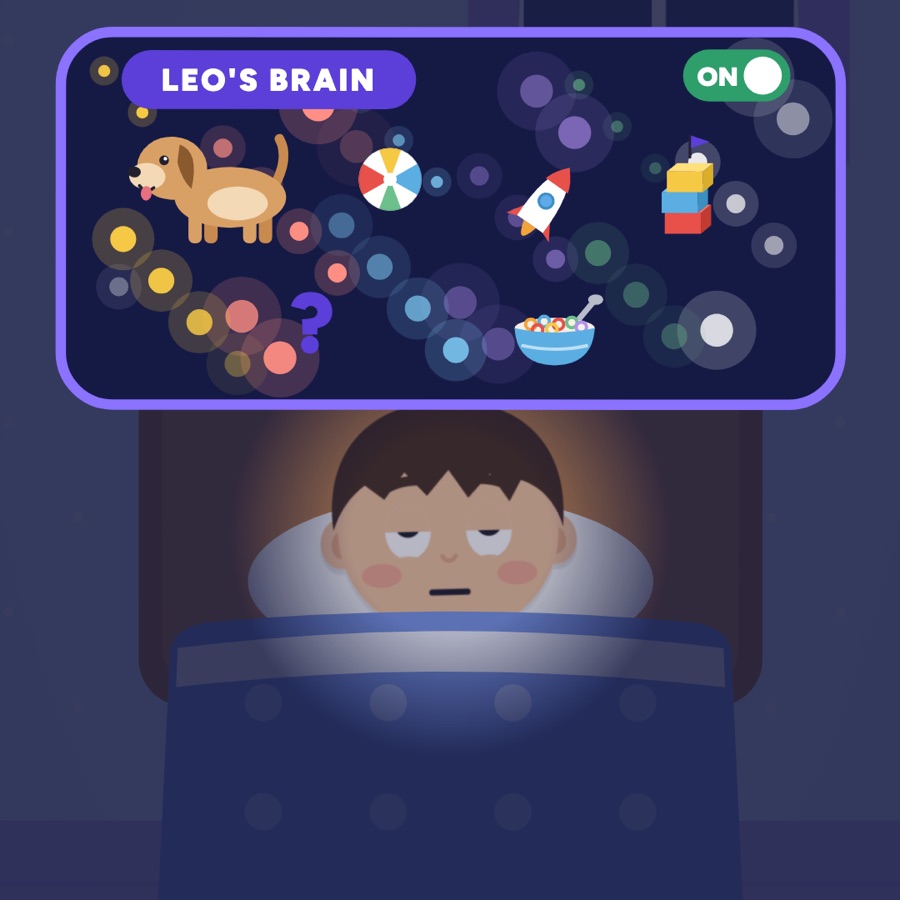
A quiet room is a busy room
Sleep problems are common in children with ADHD; research reviews have found more trouble settling and falling asleep than in other kids. When the room gets quiet, there's nothing left to grab attention, so every thought shows up at once.
Negotiating keeps the brain on
"Five more minutes", "one more story", "but I'm not tired": every discussion is new input for a brain that's trying to shut down. The routine stops being a slide into sleep and becomes a debate.
A routine that doesn't negotiate
In a randomized trial published in the BMJ in 2015, two short sessions teaching families sleep-hygiene and behavioral strategies improved sleep, and some daytime symptoms, in children with ADHD aged 5 to 12. The core idea is simple: predictable beats persuasive.
- Same steps, same order, every night. Bath, book, lights out. Short, boring, reliable.
- Make the steps visible. Pictures on the wall. The routine decides, not the argument.
- Screens off well before bed. Bright screens and exciting games make the shutdown harder.
- A calm last step. A short story, slow breathing, a soft light. The end of the day should feel the same every night.
The less bedtime is up for discussion, the faster the brain lets go.
If sleep is a long-term struggle, talk to your child's doctor: sleep problems are worth checking on their own, and questions about medication or supplements like melatonin belong with them.
A bedtime that doesn't move.
CareTec turns your child's routine into steps they can see, one at a time — and shows you what's working.
Build your child's routine →Hiscock, H. et al. (2015). Impact of a behavioural sleep intervention on symptoms and sleep in children with ADHD: randomised controlled trial. BMJ, 350:h68.
Cortese, S. et al. (2009). Sleep in children with ADHD: meta-analysis of subjective and objective studies. JAACAP, 48(9).
American Academy of Pediatrics — HealthyChildren.org: Healthy sleep habits
Published 2026-11-06 · Educational content, not medical advice.