ADHD and anger: why small things trigger big explosions
One broken crayon, and the whole afternoon explodes. If your child goes from calm to furious in seconds, here's what's going on, and what helps.
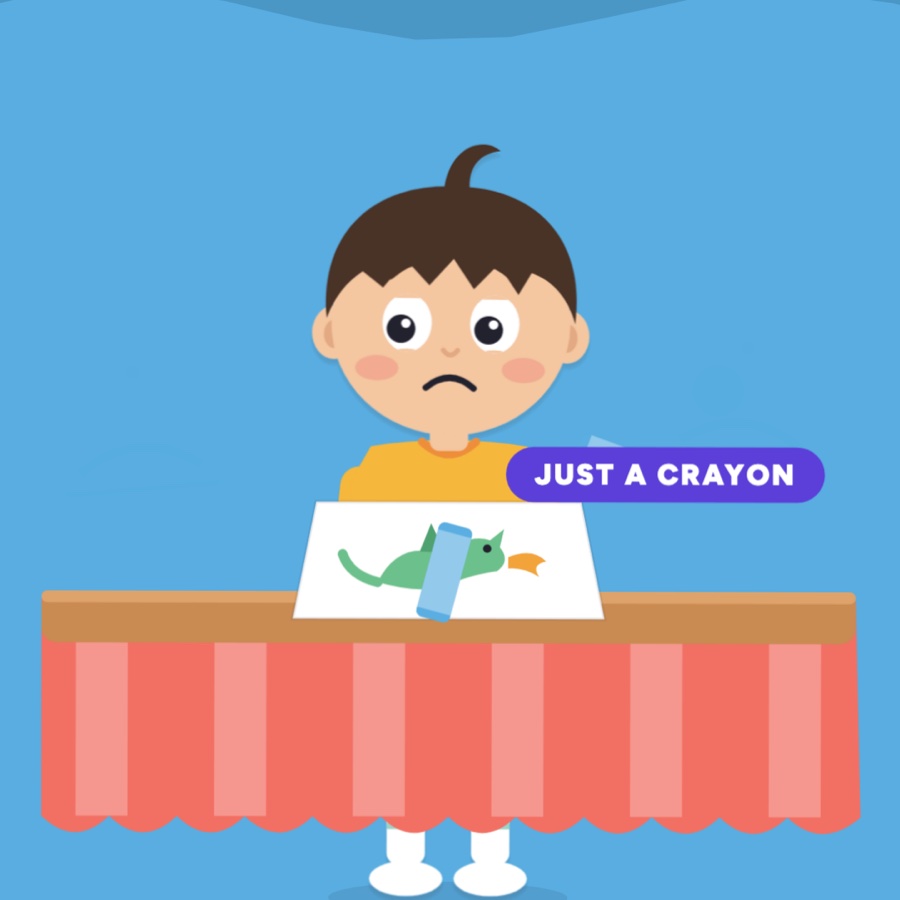
The crayon snaps. Two seconds later, the drawing is torn, the chair is on the floor, and your child is shouting that they hate everything.
From the outside, it looks completely out of proportion. It was just a crayon. But from the inside, for a lot of kids with ADHD, it doesn't feel small at all.
Fast feelings, slow brakes
ADHD isn't only about attention. Researchers have long noticed that many children with ADHD also have trouble managing emotions. A 2014 review in the American Journal of Psychiatry described emotion dysregulation as common in ADHD, and a 2016 meta-analysis in Clinical Psychology Review found that children with ADHD had more difficulty regulating emotions, on average, than their peers.
In everyday terms: the feeling arrives fast and strong, and the brakes that would normally slow it down come in late. Most kids feel a flash of frustration and then catch it. Many kids with ADHD feel the same flash, but it's already a full storm before the brakes kick in.
In the moment, the feeling is everything
When anger takes over, it fills the whole picture. The broken crayon becomes the only thing that exists. That the drawing could be finished with a different color, or that dinner is in ten minutes and it's pizza, simply doesn't register.
This is why reasoning in the middle of an outburst rarely works. "It's only a crayon, we have fifty more" is true. But the part of the brain that could hear it is offline for now.
It isn't a choice to be difficult
It's easy to read these outbursts as defiance, or as a child who is spoiled or trying to win. Usually, it's neither. Most kids feel awful afterward. Some say things like "I don't know why I do that" or "I'm a bad kid."
Seeing the explosion as a skill that's still developing, not a character flaw, changes how you respond. You're not fighting your child. You're helping them with something that's genuinely hard for them.
During the storm: less is more
When the wave is at its peak, the goal is simply to get through it safely.
- Keep yourself calm first. Your child borrows your nervous system. A low, slow voice helps more than a loud one.
- Use very few words. "I'm here. You're safe. We'll fix it later." Long explanations add fuel.
- Make space. Move breakable things, give room, let siblings leave. You don't need to win the moment.
- Hold the line on safety. Feelings are allowed. Hurting people or breaking things is not. You can say both calmly.
After the storm: repair
Once everyone is calm, come back to it. Not to lecture, but to reconnect.
Keep it short. Name the feeling ("You were really angry when the crayon broke"). Ask what might help next time. If something was broken or someone was hurt, help your child make a simple repair: picking up, saying sorry, fixing the drawing together.
Then let it go. A child who has just lost control usually already feels bad. A fresh start teaches more than a long punishment.
Build a calm-down plan when everyone is calm
The best time to prepare for the next storm is on a quiet afternoon, not in the middle of one.
- Give the feeling a name. Help your child put words to it: annoyed, frustrated, furious. Some kids like a simple scale from 1 to 5. Naming a feeling is the first step to managing it.
- Spot the early signs together. Hot face, tight fists, a loud voice. "When you notice your fists getting tight, that's the signal."
- Choose two or three calm-down moves. Squeezing a pillow, a drink of cold water, a few slow breaths, a quiet corner. Practice them when calm, so they're ready when needed.
- Make it visible. Draw the plan on a card and stick it where storms usually happen. In the heat of the moment, your child won't remember. A picture is easier to follow than a memory.
You can't stop the wave from coming. You can help your child learn to ride it.
When to ask for more help
If outbursts are very frequent, getting stronger, or putting anyone at risk, talk to your child's doctor. Emotional regulation can be a focus of treatment, and a therapist can teach both you and your child specific skills. Behavioral parent training often helps with exactly these moments.
If your child takes medication and you notice that anger tends to flare at a certain time of day, mention it to your child's doctor. They're the right person to look at that with you.
And remember: a child who explodes is not a bad kid, and you're not a bad parent. You're both working on a hard skill, one storm at a time.
Plan the calm before the storm.
CareTec turns your child's routine into steps they can see, one at a time — and shows you what's working.
Build your child's routine →Shaw, P. et al. (2014). Emotion dysregulation in attention deficit hyperactivity disorder. American Journal of Psychiatry, 171(3).
Graziano, P. A., & Garcia, A. (2016). Attention-deficit hyperactivity disorder and children's emotion dysregulation: A meta-analysis. Clinical Psychology Review, 46.
American Academy of Pediatrics — HealthyChildren.org: ADHD
Published 2026-11-08 · Educational content, not medical advice.