Why kids with ADHD melt down after school (and what helps)
The teacher says they had a great day. Ten minutes after pickup, there are tears over a granola bar. If that sounds familiar, there's a reason, and it's not you.
At pickup, they look fine. Maybe even happy. Then you get home, ask "how was your day?", and the whole thing falls apart: shouting about the wrong snack, tears over a sock, a slammed door.
The teacher says they were great. So why is home so hard?
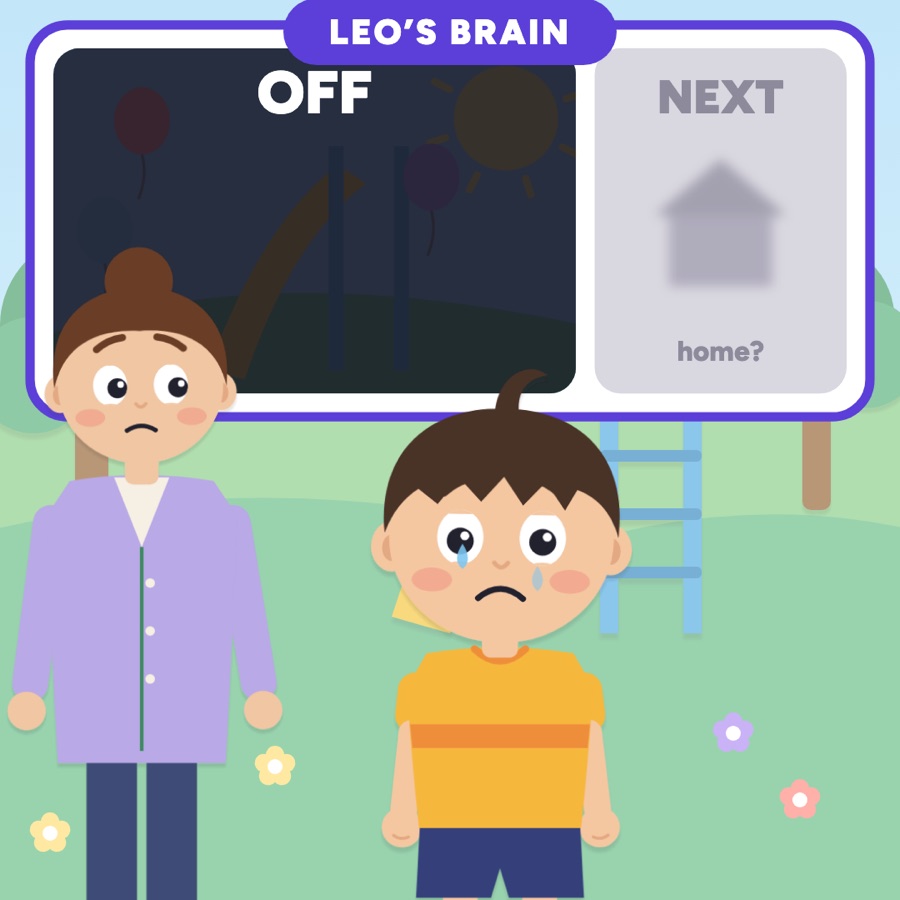
They spent the whole day holding it together
School asks a child with ADHD to do, for six or seven hours, the things that cost them the most effort: sit still, wait their turn, follow instructions, ignore the noise, keep their feelings in check in front of other kids.
Many children manage it. But managing it is work. Some therapists call what happens next "after-school restraint collapse": the child has used up their self-control at school, and home is the first place safe enough to let go.
It can feel personal, because you get the worst of it. In a way, it's a sign of trust. Home is where they don't have to hold it together.
Big feelings, fast
Research has found that difficulty regulating emotions is common in children with ADHD. A 2014 review in the American Journal of Psychiatry described emotion dysregulation as a frequent part of ADHD, and a 2016 meta-analysis in Clinical Psychology Review found children with ADHD had more trouble with emotion regulation, on average, than their peers.
In practice, that means feelings arrive quickly and strongly, before the brakes have time to work. A small disappointment can look like a very big reaction. It isn't drama. It's a brain whose emotional brakes are slower.
"But they were fine at school"
When the teacher reports a good day, it's tempting to think the problem must be home. Usually it's the other way around. The good day had a cost, and the bill arrives at your kitchen table.
Seeing it that way changes how you respond. Less "why are you like this?", more "you've had a long day, let's get you a snack." Same evening, very different temperature.
The first hour is the riskiest
Several things tend to stack up right after school:
- Hunger. Many kids barely eat lunch, especially in a loud cafeteria. A hungry brain has less patience.
- Tiredness. Concentrating all day is exhausting, even when it doesn't look like it.
- Questions. "How was your day? What did you learn? Do you have homework?" To a drained brain, that's three more demands.
- Transitions. Car, house, homework, activities. Each switch costs something.
Put them together and the first hour home becomes the moment when everything spills.
A calmer first hour
The goal isn't to stop the feelings. It's to stop adding fuel in the window when your child has the least left.
- Feed them first. Have a snack ready in the car or on the counter. Before any question, before any homework. Fuel comes first.
- Give them quiet. Twenty minutes of downtime, ideally the same activity every day: drawing, building, lying on the couch, time outside. Something calm and low on demands.
- Save the questions for later. "How was your day?" can wait until dinner. Instead, try a simple "I'm happy to see you" and leave it there. Many kids talk more once they've reset.
- Make the afternoon predictable. Snack, quiet time, then homework. When the order is the same every day, nobody has to negotiate the next step.
After school, your child doesn't need more questions. They need fuel and a little room.
When the meltdown happens anyway
Some days, it will still spill over. That's normal. A few things help in the moment:
- Fewer words. A steady voice, short sentences. Explanations won't land mid-storm.
- Stay close, stay calm. You don't have to fix it. Being nearby and calm helps the wave pass.
- Talk about it later. Once everyone is calm, a short, kind conversation works far better than a lecture during the storm.
Then, when it's over, let it be over. A fresh start matters to a child who already feels bad about losing control.
When to ask for more help
If meltdowns are frequent, intense, or getting worse, it's worth raising with your child's doctor or a therapist. Emotional regulation can be a focus of treatment, and parent training in behavior strategies can help the whole family.
If your child takes medication and you notice the meltdowns line up with a particular time of day, mention it to your child's doctor. They're the right person to look at that with you.
Give the first hour room.
CareTec turns your child's routine into steps they can see, one at a time — and shows you what's working.
Build your child's routine →Shaw, P. et al. (2014). Emotion dysregulation in attention deficit hyperactivity disorder. American Journal of Psychiatry, 171(3).
Graziano, P. A., & Garcia, A. (2016). Attention-deficit hyperactivity disorder and children's emotion dysregulation: A meta-analysis. Clinical Psychology Review, 46.
American Academy of Pediatrics — HealthyChildren.org: ADHD
Published 2026-11-07 · Educational content, not medical advice.